





Features
-
Cletzer breathes new life into ag comm and leadership programs
-
Auburn Shellfish Lab supports Alabama oyster producers
-
How the college supported alumnus Blake Poole’s career in politics
-
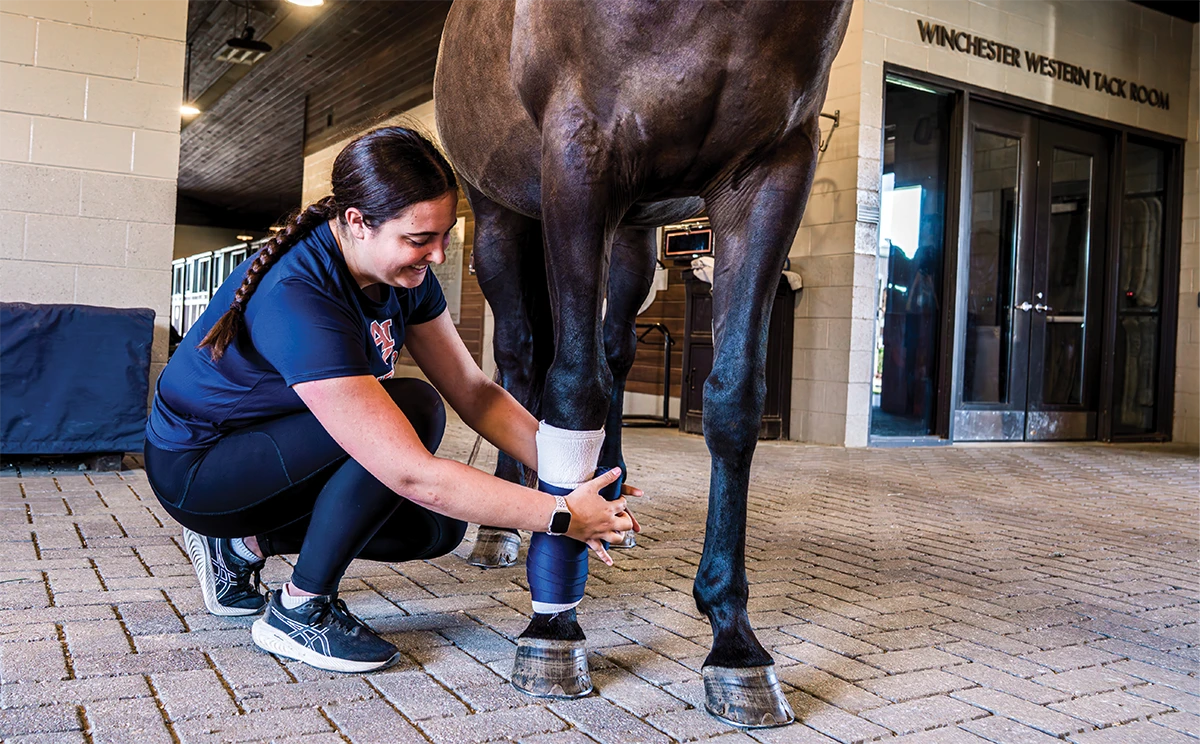
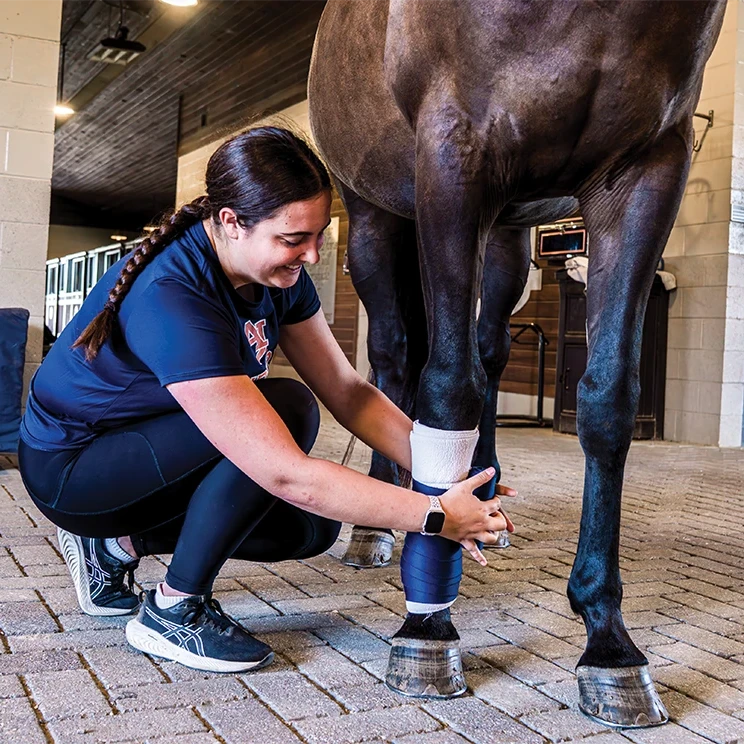
Internships connect animal sciences students to equestrian center
-
Extension, Auburn search for answers in the Land Down Under
-
Four agriculture alumni named to this year’s 20 Under 40 list
In every issue
-
The Future of Crop Production
-
A Q&A with the Head of the Department of Agricultural Economics & Rural Sociology Mykel Taylor
-
Kaitlyn Goodman’s Gigi shares her hashbrown casserole recipe

Building leaders through community connections
Agricultural communications is an ever-more relevant subset of the industry that involves clearly and accurately connecting the public to the science, business and culture of agriculture.
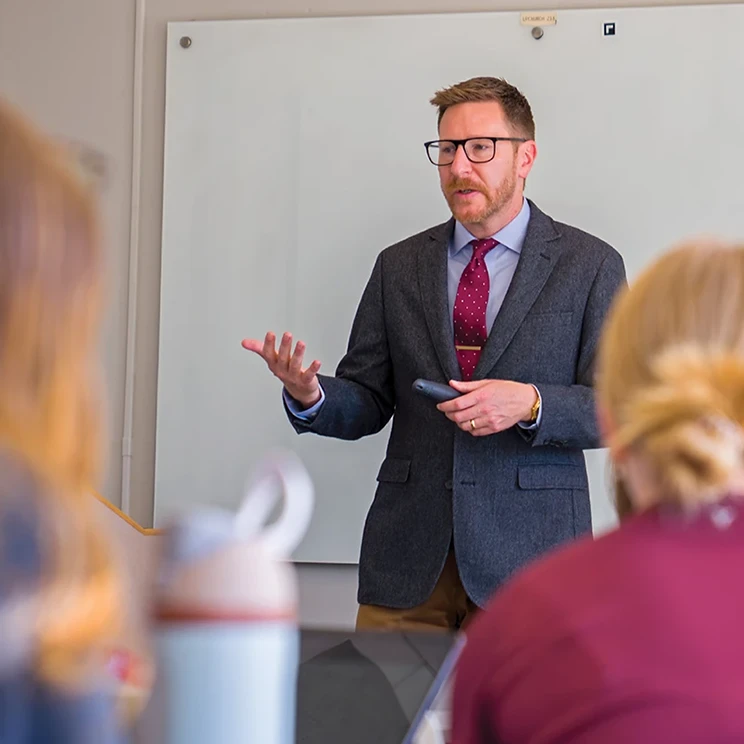
“I view the field of agricultural communications as a bridge between the 1.6% of people who work in agriculture and everyone else,” Cletzer said. “Agriculture has a lot of the same issues as science — growing distrust of experts and institutions, lack of information or disinformation about methods, and concerns about ethics and values — and ag communications professionals tell agriculture’s story and build trust with the public.”
As professor of practice, Cletzer practices what he teaches. He directs the agricultural communications and leadership studies programs while writing research stories and press releases for the college’s Office of Communications & Marketing.
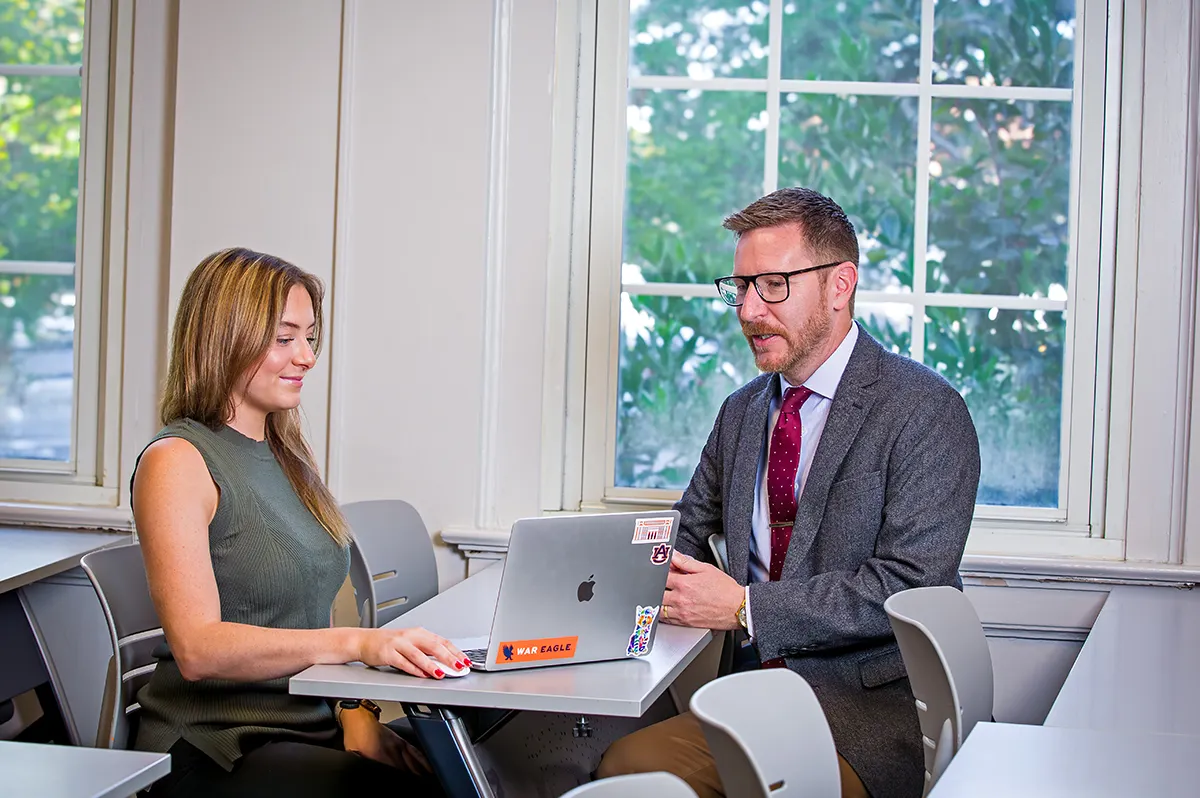

pon his hire in 2023, Cletzer received the green light from Associate Dean for Instruction Amy Wright to revamp both the agricultural communications major and agricultural leadership studies minor.
The minor in ag leadership was technically in place when Adam arrived, but it was essentially defunct because the two required courses hadn’t been taught in six years.
“So, I recreated those courses for today’s world — one for leading teams and another for making change in communities,” Cletzer said. “I also changed the minor’s requirements so it’s more flexible to students’ interests.”
Today, the 15-credit-hour minor includes the two required courses — AGRI 3800: Leading People and Teams in Agriculture and AGRI 5840: Leading Organizational and Community Change in Agriculture — and offers a selection of additional courses on everything from global issues in agriculture to environment, society and justice.
Cletzer’s background is in agricultural leadership studies. He received his doctorate in leadership development and social change from Virginia Tech University and master’s in agricultural education and communications from University of Florida. Prior to joining the Auburn faculty, he taught at the University of Missouri.
He brings a new approach to leadership to the college, one that asks, “What if we view leadership not as a role but a relationship?” — a question he asked himself in his Ph.D.
“We underestimate how much the Industrial Revolution impacted the way we think about, well, everything,” Cletzer said. “The traditional view of leadership is that it is something that emanates from the leader — a property, trait or set of behaviors. That is an industrial way of thinking about it, as a product.”
Cletzer said in the early 2000s, leadership scholars began to look at other metaphors for how leadership develops.
“One of those was ecosystems,” he said. “It’s this idea that an ecosystem is not linear. It is not a simple cause and effect. An ecosystem is rife with feedback loops — it’s the straw that broke the camel’s back or the last snowflake that caused an avalanche.”
The resulting conclusion was that leadership is as much a relationship between a leader and followers as it is a set of characteristics.
“The other aspects to consider are sort of economical,” Cletzer explained. “As people became more educated and demanded more autonomy, they were less apt to walk into the workplace and say, ‘Tell me what to do, boss.’
“Leaders are less and less the people who know how to do everything, because everything is increasingly more complicated. So, we’re seeing that leaders are more facilitators, people who bring other people together that have the expertise to solve complex problems.”
n many ways, this is what Cletzer has done for the ag comm program at Auburn. He created an advisory committee comprising Auburn agriculture and journalism administrators, faculty and advisors, as well as students and industry leaders from organizations like Alfa, Sweet Grown Alabama, the Alabama Cattleman’s Association and more.
Meanwhile, he revamped the curriculum by looking carefully at the program’s strengths and weaknesses, determined to fill gaps.
“Ag comm has a couple accepted competency frameworks,” Cletzer said. “Basically, experts have said ‘here are the 50 things they need to be good at.’ So, I looked at the curriculum, looked at every one of those courses and their course descriptions, and checked off those competencies. When done, I could see that this program looked like a traditional ag journalism program would have — strong in writing and storytelling — but there were huge holes for design and comms strategy.”


Today, the agricultural communications program is designed to produce graduates who possess exceptional communication skills meshed with a strong science-based background in agriculture and natural resources. This combination of technical subject matter knowledge and communication skills is not found in other curricula, according to Cletzer.
“One of the things that sets ag comm apart is that the students who graduate do have some technical expertise compared to those who graduated from a school of journalism,” he said. “They have the communication skills but may not have any particular contextual skills. I think our students are more marketable because they have both.
“They don’t need to be four courses deep in ruminant nutrition, but they do need to understand the struggles of the industry so they can form a rapport.”
Senior agricultural communications major Breanna Black said Cletzer’s efforts have made the program more welcoming to students.
“He has allowed me to share my thoughts and opinions about the program,” she said. “As a student, I really appreciate him taking the time to hear my concerns and ideas. He was one of the first professors I met when I transferred to Auburn – and what better person to represent Auburn faculty than him. His love for his profession and his students is admirable, as well as his efforts to make the agricultural communications degree program better.”
In revamping the curriculum, Cletzer set out to make it both broader — covering a wider range of agricultural subjects and communications specialties — and more specialized.
“We added a pre-law option,” he said. “I wanted to make the curriculum as broad as possible, but that stresses out the students who like structure. So, we went back in and added that option, and we had people in it immediately. Now, we’re adding new ones, too, in magazine writing and non-formal ed.”
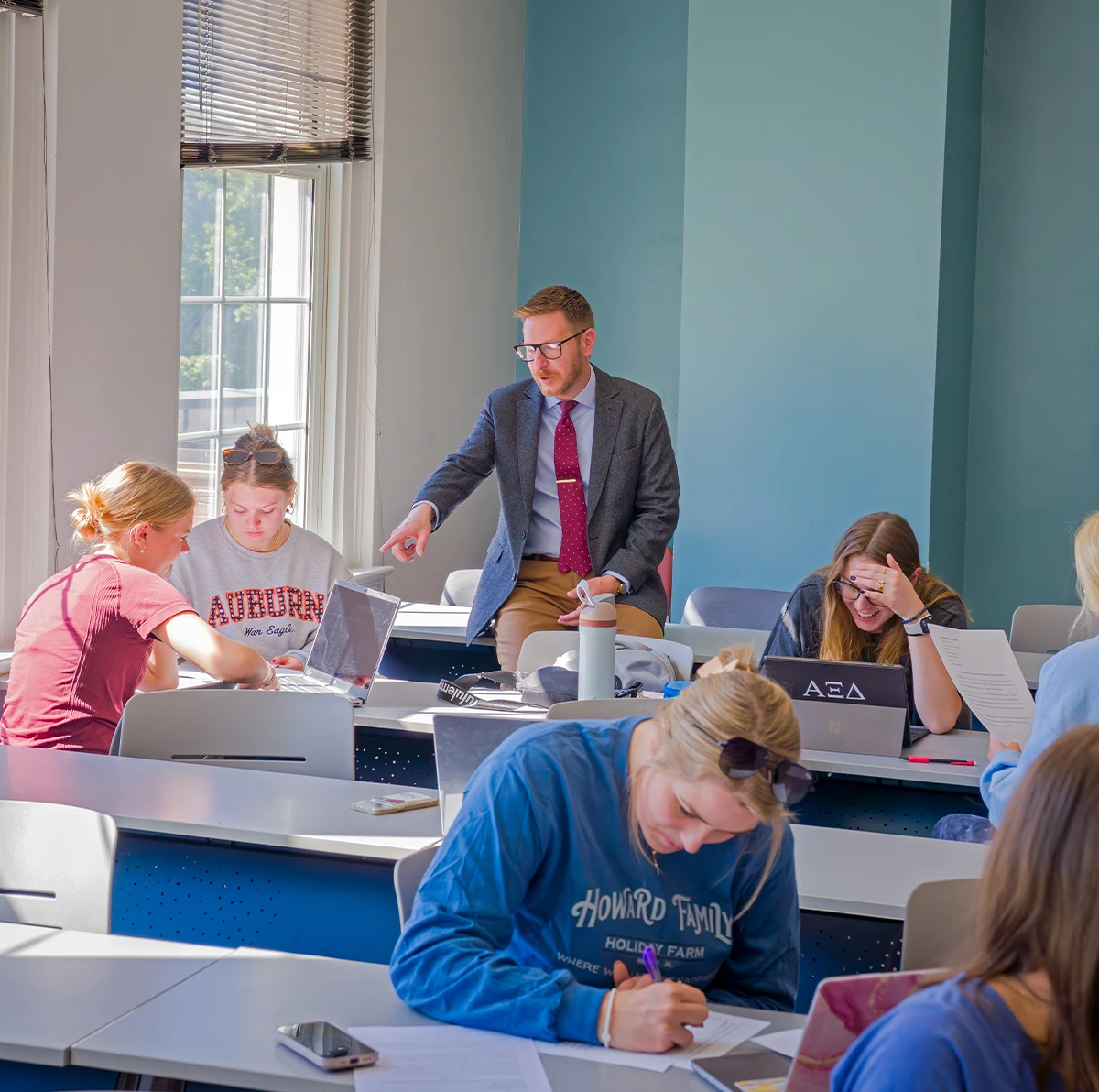

In cultivating these programs and the students within them, the College of Agriculture is reaping the rewards of its investment. Enrollment in agricultural communications is the highest it’s been in five years, according to Cletzer, and it continues to grow.
Under Cletzer’s leadership, agricultural communications and leadership studies have become fertile ground for collaboration, innovation and growth. And as graduates carry Auburn’s values and voice into the wider world, they can see themselves as part of something larger: an ecosystem of ideas and relationships that defines modern agriculture.


From tide to table
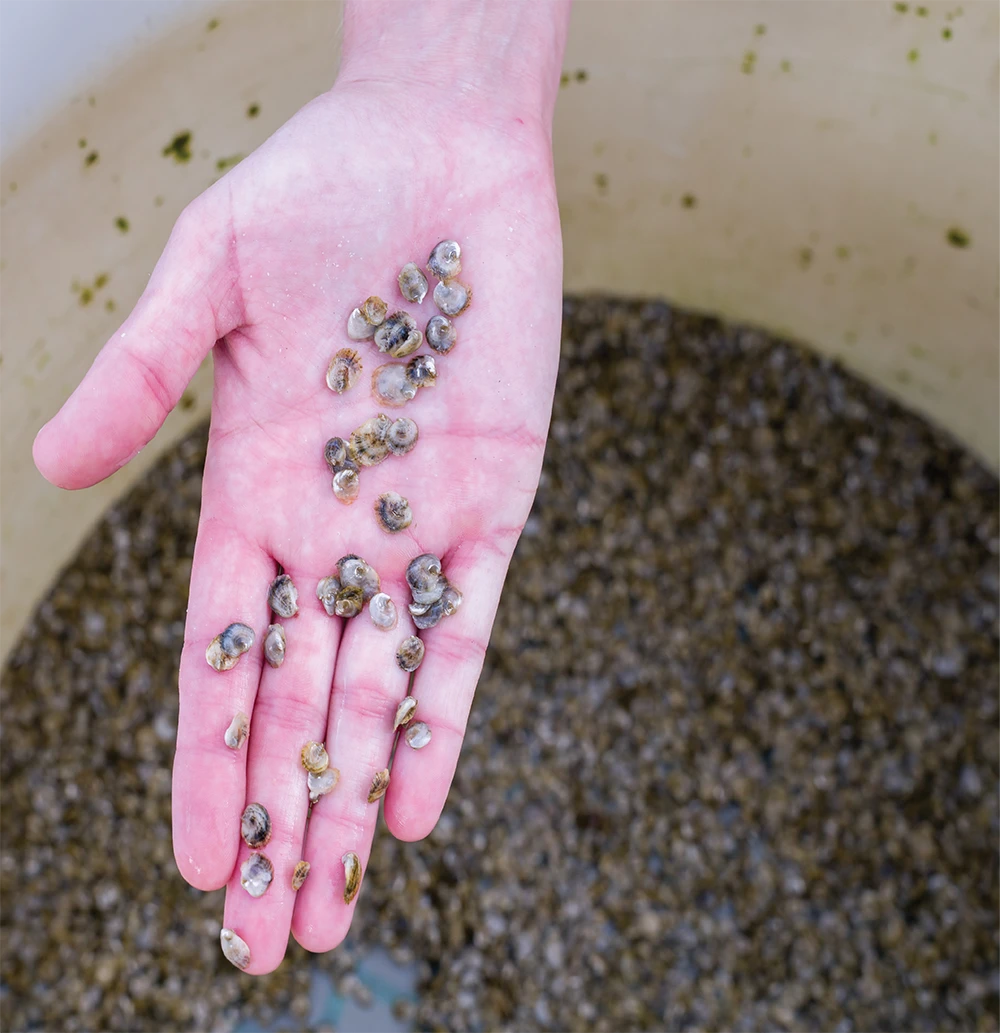
With high production costs and labor-intensive work, Alabama oyster producers rely on science and support from researchers like Andrea Tarnecki, Alabama Cooperative Extension System specialist, assistant professor and dedicated researcher at the Auburn University Shellfish Laboratory. Nestled on tranquil Dauphin Island in Pelican Bay, the Auburn University Shellfish Lab is part of the School of Fisheries, Aquaculture and Aquatic Sciences.
There, Tarnecki and her colleagues study marine invertebrates like the Eastern Oyster, examining the biological, ecological and economic factors that shape shellfish production along Alabama’s coast.
“Whether on-site at our lab, or directly on a grower’s farm, we engage growers often to identify their concerns and develop grant proposals and research projects aimed at addressing the issues they communicate to us,” Tarnecki said.
With their luxury status, oysters are considered a culinary delicacy commanding a premium price. Oysters are always in high demand due to their rarity and the costs of growing, harvesting and delivering them from sea to table. For this reason, the team at the AU Shellfish Lab analyzes ways to improve oyster production and takes their results straight to the growers.
The AU Shellfish Lab examines all parts of oyster life, starting with reproduction. The reproductive process of oysters is called spawning. This occurs when oysters release eggs and sperm into the water, and fertilization happens externally. Scott Rikard, the hatchery manager and researcher at the lab, oversees the production process of spawning oysters and rearing the resulting larvae.
“One of the fascinating things about oyster production is how a microscopic egg transforms in less than a year into a briny delicacy on a restaurant plate,” Rikard said.
The AU Shellfish Lab team of research assistants and technicians puts adult oysters into individual containers to trigger the spawning process. With temperature control, the oysters are tricked into spawning, which typically occurs when temperatures reach approximately 74 degrees Fahrenheit in the spring. The separation of these broodstock oysters in the containers allows the lab to identify the male oysters from the female oysters by the way they behave when they spawn and control the parentage of the resulting offspring.
Once the eggs are fertilized, millions of tiny oysters are moved to culture tanks in the outdoor hatchery. During the growth stage, baby oysters are free swimming larvae. The one-thousand-gallon culture tanks housing around 40 million larvae per tank, and the microscopic oysters develop for about two weeks.
One of the fascinating things about oyster production is how a microscopic egg transforms in less than a year into a briny delicacy on a restaurant plate.
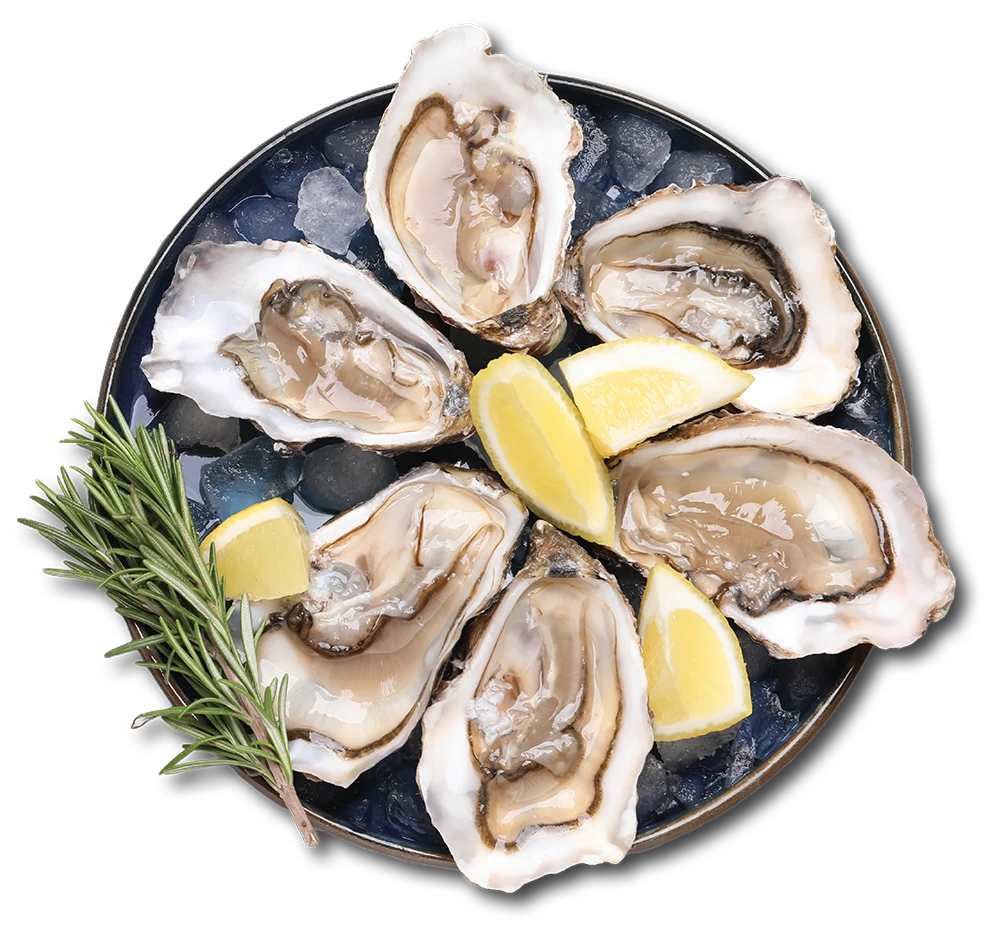
We try to provide our growers sustainable aquaculture practices and research that helps them save on production costs and get a great market price.
“The interest in producing locally grown seafood has increased market production over the last few years,” Tarnecki said. “So, we try to provide our growers sustainable aquaculture practices and research that helps them save on production costs and get a great market price.”
From the hatchery, the oyster larvae are moved to a nursery when they are ready to set. For restoration projects, the larvae are put in tanks full of oyster shells where several larvae attach to each shell creating clumps of oysters that are used for oyster gardening.
They say one man’s trash is another man’s treasure — enter oyster gardening. The Auburn University Marine Extension and Research Center coordinates oyster gardening, using larvae provided by the AU Shellfish Lab to populate recycled shells. In fact, recycled oyster shells are collected from seafood restaurants all over the Gulf Coast in partnership with the Alabama Oyster Shell Recycling Program. These recycled shells are then used to house spat—or young oysters—as they develop after attachment to the shell.
The AU Shellfish Lab researchers and technicians care for the spat-on-shell for several weeks until delivery to volunteers around Mobile Bay to grow in cages — off piers — over the next few months. After that process, the once-recycled shells now contain fully grown clusters of oysters. These oyster clusters are reintroduced into the wild to help rebuild wildlife reef populations in areas where restoration is needed.
Working in the laboratory and directly with growers, the AU Shellfish Lab is instrumental in conducting innovative research for oyster farming practices. To produce single seed for farming market oysters, silos are filled with a bottom layer of finely ground oyster shell. Inside the silo, the team releases approximately 300,000 oyster larvae where each larva attaches to a single grain of ground up oyster shell. Each silo at the AU Shellfish lab contains about 150,000 — to be used like seed — which is enough oysters for a small-scale oyster farm to operate.
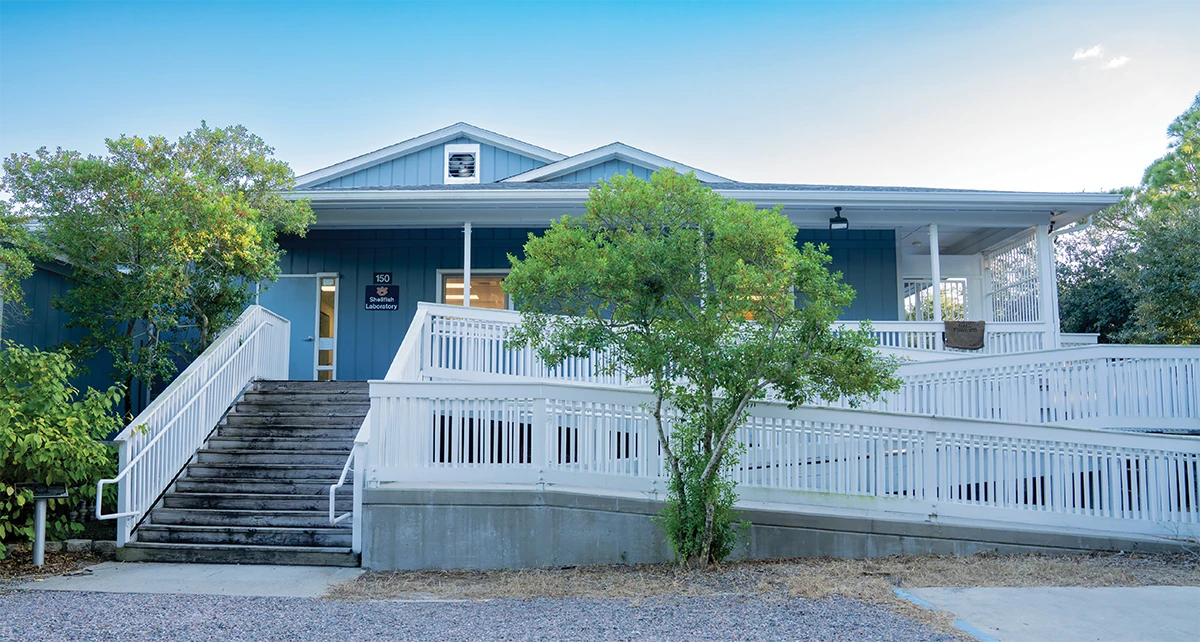
Following maturation, the AU Shellfish Lab uses the fully developed oysters for various research purposes. The research efforts allow the team to provide best management practices to oyster farmers to enhance oyster growth and farming efficiency during production, which gives them the ability to get a better return on investment of their product. But their work isn’t limited to their own facilities; they work with oyster producers all over the coastal region.
“Our research projects often take place directly on grower farms, and this broadens the sites we have available with different water quality parameters,” Tarnecki said. “For example, sites have varying salinities, environmental pressures, and predator abundances. Understanding these issues in different locations helps us give better recommendations.”
The AU Shellfish team offers hands-on training, site visits and even educational in-person meetings to deliver comprehensive research into the hands of the growers. Through Alabama Extension outreach efforts, Tarnecki and the team work alongside coastal communities to deliver insights that advance sustainable aquaculture.
From science to shore, the Auburn University Shellfish Lab works steadfastly to ensure Alabama’s oyster farmers have the best recipe for success — all while honoring the deeper call of coastal stewardship.
A Matter of Priorities



A Matter of Priorities

Former Tiger football walk-on, Buchanan, Georgia, native and Auburn graduate Blake Poole has never had a problem keeping his priorities in order.
In 2013, after earning a football scholarship for his offseason hard work but playing briefly in only three games on special teams as an undersized defensive back, he had a chance to impress NFL scouts at Auburn’s Pro Day and possibly pursue a professional career. But rather than spend the weekend before the event training or resting, Poole spent his time working on the family farm.
“I was kind of nervous about running today because I stayed outside a lot this past weekend working on my farm,” Poole told a reporter at the time, after turning heads by flying through a 40-yard dash in 4.42 seconds and posting a 38-inch vertical leap, second-best on the team. “I was a little tired, but at the same time I felt pretty good.”
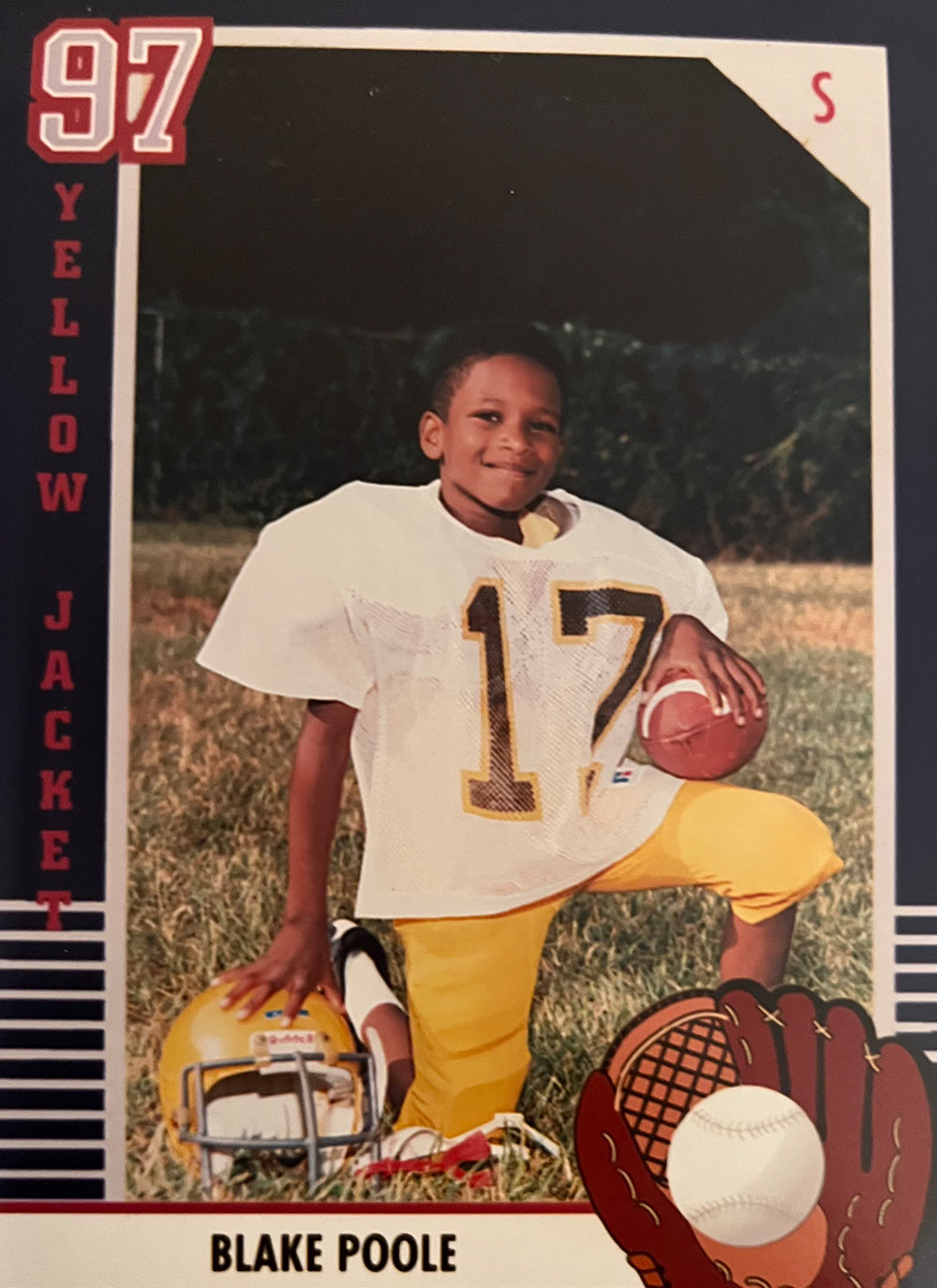
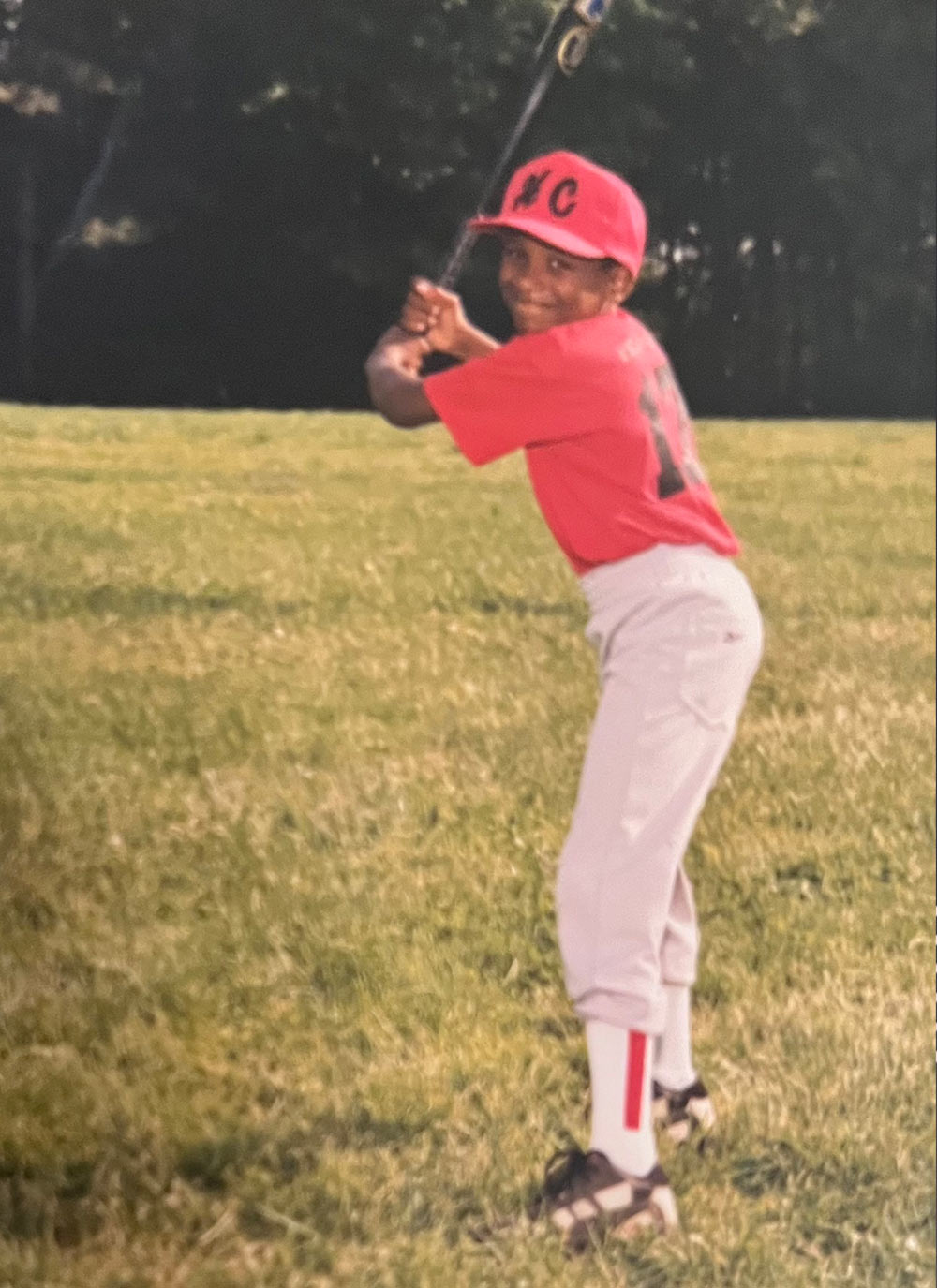
But while Poole impressed the scouts in attendance with one of the best physical performances of the day, football had never been his first love. He had grown up a farm-loving country boy, the son of a Georgia State Trooper, and his love for farming and cattle ranching meant he had a plan beyond sports.
“After prep school I got a call from Auburn Assistant Coach Wayne Bolt asking if I wanted to come be a preferred walk-on,” Poole recalled. “I thought to myself, ‘I’m not going to be a walk-on and I’m definitely not going to Auburn.’
“But my dad said I should give it a chance and just go see. So, my mom, dad, cousin and I got into the truck and headed on down. I remember this like it was yesterday, getting off the I-85 exit onto College Street and seeing chicken houses and big black Angus bulls. I was like, wow! That’s what really sold me on Auburn.”
Poole may not have seen the field much as a walk-on with the Tiger football team, but he did earn an SEC championship ring and get to go to Pasadena for the national championship game as a member of the 2013 squad. And he made a strong impression on his coaches with his infectious smile and strong country work ethic.
“I used to tell Blake he was the only player who had as many pairs of cowboy boots as I did,” remembered Phillip Lolley, who was defensive backs coach on Head Coach Guz Malzahn’s national title runner-up team that year. “He was a humble kid who worked his tail off and gave 110 percent in practice every day. He came ready to work and did whatever you asked him to do with a smile on his face.”
That positive attitude and willingness to work carried Poole through some difficult times trying to manage both football and academics.
“I had a great support system at Auburn,” Poole said. “But there were many times when I had to pull all-nighters so I could pass a test. I’m from a small town and I didn’t want to be that guy who came back home because he didn’t make it. I wanted to give up so many times and go back home to Georgia, but my professors always stepped in.”


A self-professed country boy himself, Foshee quickly realized Poole was a kindred spirit, and he became a mentor and more to him during his sometimes challenging efforts to balance football and schoolwork. Poole eventually even roomed with Foshee’s two sons on campus.
“Blake had to work extra hard and sometimes struggled with the load, but he never quit,” Foshee said. “He was blessed to have an amazing family at home, and in the college and athletics as well. He was also a true student-athlete, and most of all, a real Auburn man.”
Don Mulvaney, now a retired professor emeritus of animal sciences, has similar memories of Poole the student.
“Blake carried himself with a quiet humility and curiosity that set him apart,” Mulvaney explained. “Like many memorable students, his journey was one of growth and perseverance. He didn’t start as the loudest voice in the room, but rather as a humble leader who led by example. He was steady, kind and reliable — a ‘teammate’ in every sense of the word. He lifted others up and infused the class with a sense of optimism and encouragement.”
Like Foshee, Mulvaney has stayed in touch with Poole over the more than a decade since, following his career and speaking with him regularly.
“Blake represents the very best of the Auburn spirit — grounded in integrity, guided by service and driven by the belief that good relationships and hard work still matter,” Mulvaney said. “He’s a reminder of why those connections between teachers and students endure long after the classroom lights are turned off.
“He often talked about his upbringing, his family’s values and his dream of one day owning a Brahman cattle operation — conversations that revealed deep roots, great upbringing and big vision. I also recall moments where Blake had hopes of playing some professional football. But true to his reflective and grounded nature, he sought purpose beyond the playing field.”
—Wheeler Foshee
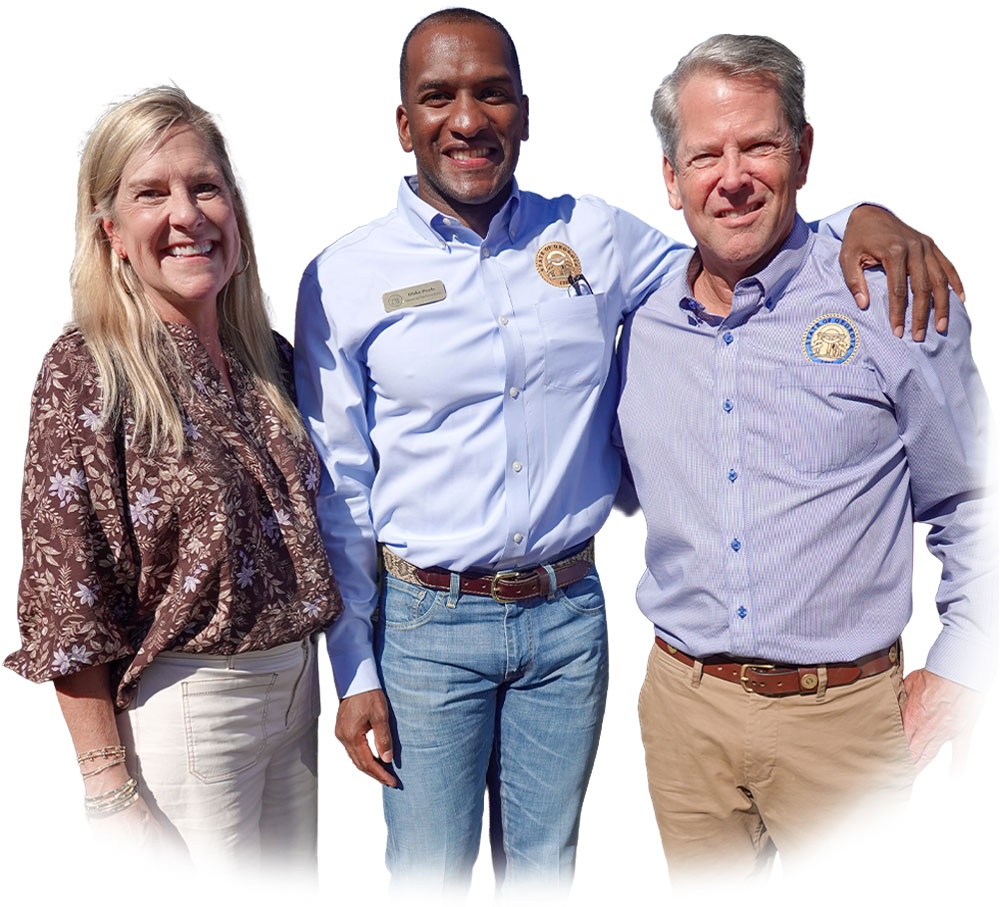
Blake Poole (center) with Georgia Gov. Brian Kemp (right) and Kemp’s wife, Marty (left).
“What first got me into politics was my dad,” Poole noted. “When he was a trooper, he was on the detail for Guy Millner, a candidate for Georgia governor back in the 1990s. When my dad retired, he ran for the office of Haralson County Commission chairman and eventually served four terms.
“So, I learned from my dad how to serve people and do what is right. He is my rock and the foundation of who I am today. He is also now the director of the Governor’s Office of Highway Safety for the State of Georgia.”
Although the chance to work for the Secretary of State’s Office was a great opportunity and meant getting back into the political arena he had enjoyed before, Poole still hesitated before taking the job.
“I was thinking to myself ‘I have a company truck, I get to see farmers every day, wear jeans and chew tobacco, why would I trade that in to go work in government?’ And on top of that, Brian Kemp was running for governor. But I took the job because I wanted to be closer to my cows, and I knew in my heart he was going to win.”
“Being a field rep for the Governor’s Office is like going through two-a-days during fall football camp every day,” Poole explained. “At the same time, it’s one of the most rewarding things ever. I often thank the Lord for choosing me to do this.
“I get so many calls from people needing help that my day never ends” he concluded. “I’m on call 24/7 and always have my phone with me. But coming from a family who likes to help, I was born for this. One thing about being from the rural part of the state is that we have good neighbors and family that help out. So, I’m going to keep on doing it. It’s not about me it’s about the people.”
“Being a field rep for the Governor’s Office is like going through two-a-days during fall football camp every day,” Poole explained. “At the same time, it’s one of the most rewarding things ever. I often thank the Lord for choosing me to do this.
“I get so many calls from people needing help that my day never ends” he concluded. “I’m on call 24/7 and always have my phone with me. But coming from a family who likes to help, I was born for this. One thing about being from the rural part of the state is that we have good neighbors and family that help out. So, I’m going to keep on doing it. It’s not about me it’s about the people.”

Agriculture Merch Store

A Unique Partnership


A Unique Partnership

Recent Auburn University alumnus Nick Williams works on a horse’s shoe. Williams is in farrier school in Oklahoma, beginning a career he discovered through his work at the Equestrian Center.
At Auburn University, students are taught to meet a practical world with hard work, knowledge to work wisely, and minds and hands trained to work skillfully.
Few places embody this charge outlined in the Auburn Creed more vividly than the Auburn University Equestrian Center, where students work with the technical experience of a laboratory and the high-stakes intensity of a Division I playing field.
“We’re uniquely situated with athletics and academics,” said Head Coach of the NCAA Auburn Equestrian Team Jessica Braswell. “With our partnership with the Department of Animal Sciences and College of Agriculture, we are able to provide a unique opportunity. We’ve got the horses, the staffing and our coaches — it’s a high-performance environment from the athletic standpoint that can give these kids an experience that they wouldn’t have otherwise.
“It is such a good teaching environment, but it also has to be a high-performance environment. We’ve got to keep the horses going. We’ve got to make sure they’re ready for practice and for meets. That’s really hard to get in a true lab setting.”
At Auburn University, students are taught to meet a practical world with hard work, knowledge to work wisely, and minds and hands trained to work skillfully.
Few places embody this charge outlined in the Auburn Creed more vividly than the Auburn University Equestrian Center, where students work with the technical experience of a laboratory and the high-stakes intensity of a Division I playing field.
“We’re uniquely situated with athletics and academics,” said Head Coach of the NCAA Auburn Equestrian Team Jessica Braswell. “With our partnership with the Department of Animal Sciences and College of Agriculture, we are able to provide a unique opportunity. We’ve got the horses, the staffing and our coaches — it’s a high-performance environment from the athletic standpoint that can give these kids an experience that they wouldn’t have otherwise.
“It is such a good teaching environment, but it also has to be a high-performance environment. We’ve got to keep the horses going. We’ve got to make sure they’re ready for practice and for meets. That’s really hard to get in a true lab setting.”
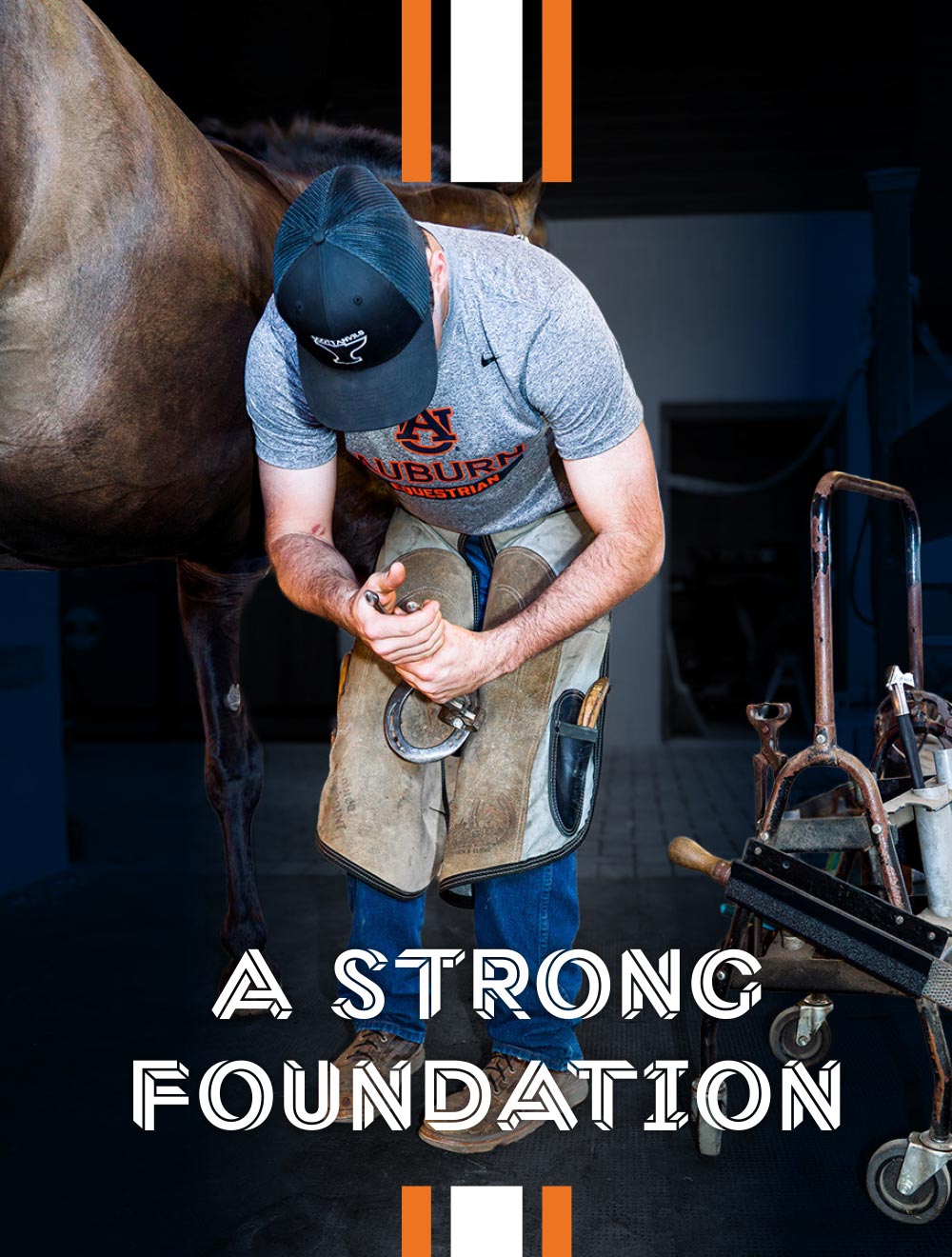
Recent Auburn University alumnus Nick Williams works on a horse’s shoe. Williams is in farrier school in Oklahoma, beginning a career he discovered through his work at the Equestrian Center.
“She’s done a really good job of tailoring the work to where their interests lie,” Braswell said. “If they want to go pre-vet or barn management or another direction — and we’ve had them go all different directions.”
Nick Williams started working in the barn in January 2022. Williams didn’t grow up with horses, but he needed experience with animals and a job as a pre-vet student. He started as a barn hand, cleaning stalls and feeding and medicating horses. He then moved into an equine intern position, caring for horses that were sick or injured, while also helping to keep the performance horses in top condition.
“As part of that role, I assisted with daily therapy routines to support the horses’ health and performance,” he said. “This included using MagnaWave, cold laser, Theraplate, BEMER, and massage gun treatments on non-meet days and as preparation leading up to competitions.”
While working in the barn, he noticed a man who would come weekly to shoe the horses.
“At the time, I didn’t know what a farrier was, but watching him work immediately caught my interest,” he said. “One day I saw that he was missing his helper, so I asked if he needed a hand. He let me help, and the next week I started working with him regularly.
“From that point on, I completely fell in love with the trade.”
Williams graduated in May with a degree in animal sciences- allied industries and is headed to Five Star Horseshoeing School in Minco, Oklahoma, in October.
“For the past three years, I’ve been apprenticing under (Certified Farrier) Andrew Wells, which has given me a strong foundation and confirmed that this is the career I want to pursue.”
He credited the Equestrian Center with not only introducing him to the trade he’s become so passionate about, but with the determination needed for animal care.
“It showed me that not everyone is meant for this job,” he said. “That it takes hard work and dedication, long hours, and grit.”

“I always knew I wanted to work with animals, but I didn’t really have anybody telling me how to do that,” said Coker, who rode horses as a child. “I had a friend that worked in the barn, and she said that they were hiring. So, I started as a student worker, and realized how much I loved it and how much I wanted to do that for the rest of my life.”
When Coker moved into the internship role in the barn, she took on new duties in addition to those she had as a student-worker, including training new hires and working on meet days to care for the horses.
“They learn a thing or two about working with horses,” Braswell joked. “You know, do I want to be up at 6 a.m. doing this? Do I want to be in the heat? Because you do have to love it.”
Coker agreed.
“To normal people, I describe my job like, ‘I get there at 6 a.m. and I leave covered in mud and dirt,’” she said. “And they’re like, ‘Why do you enjoy doing that?’
“I never get sick of it. Ever.”
When Coker switched to the animal sciences major, she understood that securing internships was an important part of gaining relevant work experience. She applied for several internships outside of Auburn, securing one at Peterson Smith Equine Hospital in Ocala, Florida.
At Peterson-Smith — an equine hospital open 24 hours a day, seven day a week — Coker worked 60 hours a week, day shifts and night shifts. She gained increase experience in equine care, including watching surgeries and administering treatments.
The experience was so formative, her plan after graduation is to move back to Ocala, where horse farms and equine hospitals are popular and the opportunities in the industry are numerous.
Coker credits Renfroe with helping her gain the necessary experience to be career ready, beyond her duties as Coker’s supervisor.
“She encouraged me through the Peterson Smith process, changing my major, everything,” Coker said. “And we know that she would never ask anybody who works for her to do something that she wouldn’t do herself. This work can seem unnecessary or monotonous sometimes, but we know there is always a reason for what she’s asking us to do.”
The only thing Coker would change about her time working in the barn?
“I wish I’d started it sooner,” she said. “If I had known that this job existed when I first got to Auburn — because I worked my first three years here, too, doing other things — I would have loved it that much longer. And I think I would have gotten a lot farther, a lot quicker.” Fellow intern Eliza White is an equestrian on the Auburn IHSA club team, so she was familiar with the barn from her freshman year. Like Coker, her time in the barn prepared her for another formative internship experience.

White and her fellow interns would administer medications and day-to-day treatments, as well as assist in the surgical department, prepping the horses for anesthesia.
Now, she has her sights on veterinary school, with a specific interest in reproductive sciences.
“I have always been really interested in science and the medical field, and I’m also just a really big animal person,” she explained. “And what I learned about Auburn’s animal science program specifically is that the way they teach is very hands-on here.”
Hands-on, high-impact student experiences are a high priority for the Department of Animal Sciences, according to Undergrad Program Officer Carolyn Huntington.
“Whether it is specifically internships or, more broadly, high-impact experiences, it is about connecting classroom knowledge and research knowledge to practical applications,” Huntington said. “While they’re getting those high-impact experiences, they’re expanding and building their network and becoming more prepared for the career field that they hope to pursue.”
These paid internships at the Equestrian Center are made possible by donor Linda Hardy, wife of the late Professor Emeritus William E. “Bill” Hardy Jr., a faculty member in the Department of Agricultural Economics & Rural Sociology at Auburn for almost 39 years and associate dean for instruction from 2000 to 2007.
“We wanted to just start a way to get kids more hands-on experience with the horses,” said Braswell. “And the idea of doing so through an internship resonated with one of our supporters, Linda Hardy.”
Braswell is a 2009 graduate from the Department of Agricultural Economics & Rural Sociology. Her advisor when she was a student in the department?
Bill Hardy.
“He was always so invested in students and experiences in Auburn and the College of Ag,” Braswell said. “I think it’s been a really cool thing that it’s in his honor, and through his legacy, he is still affecting these students in the college and still helping these students learn and gain experience.
“It really feels very full circle, this opportunity to honor Bill Hardy, to give this experience to students in the Department of Animal Sciences, and to receive their support in athletics. The way it has all evolved is pretty special.”

From Soil to Sky
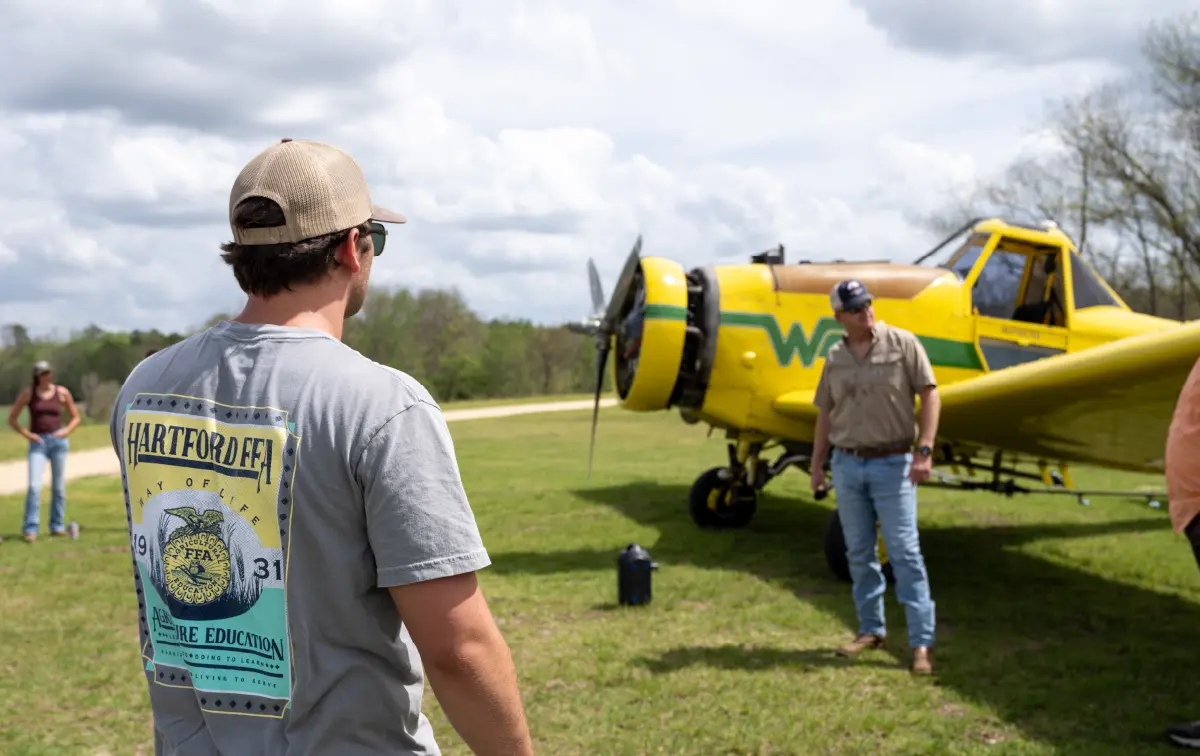
This demonstration is more than a show. It’s a glimpse into the future of farming.
Each semester, students in Auburn’s Department of Crop, Soil & Environmental Sciences visit Morris Farms as part of CSES 5/6230: Drones for Crop Production, a course created to prepare them for a new era of agriculture — one where technology and tradition fly together.
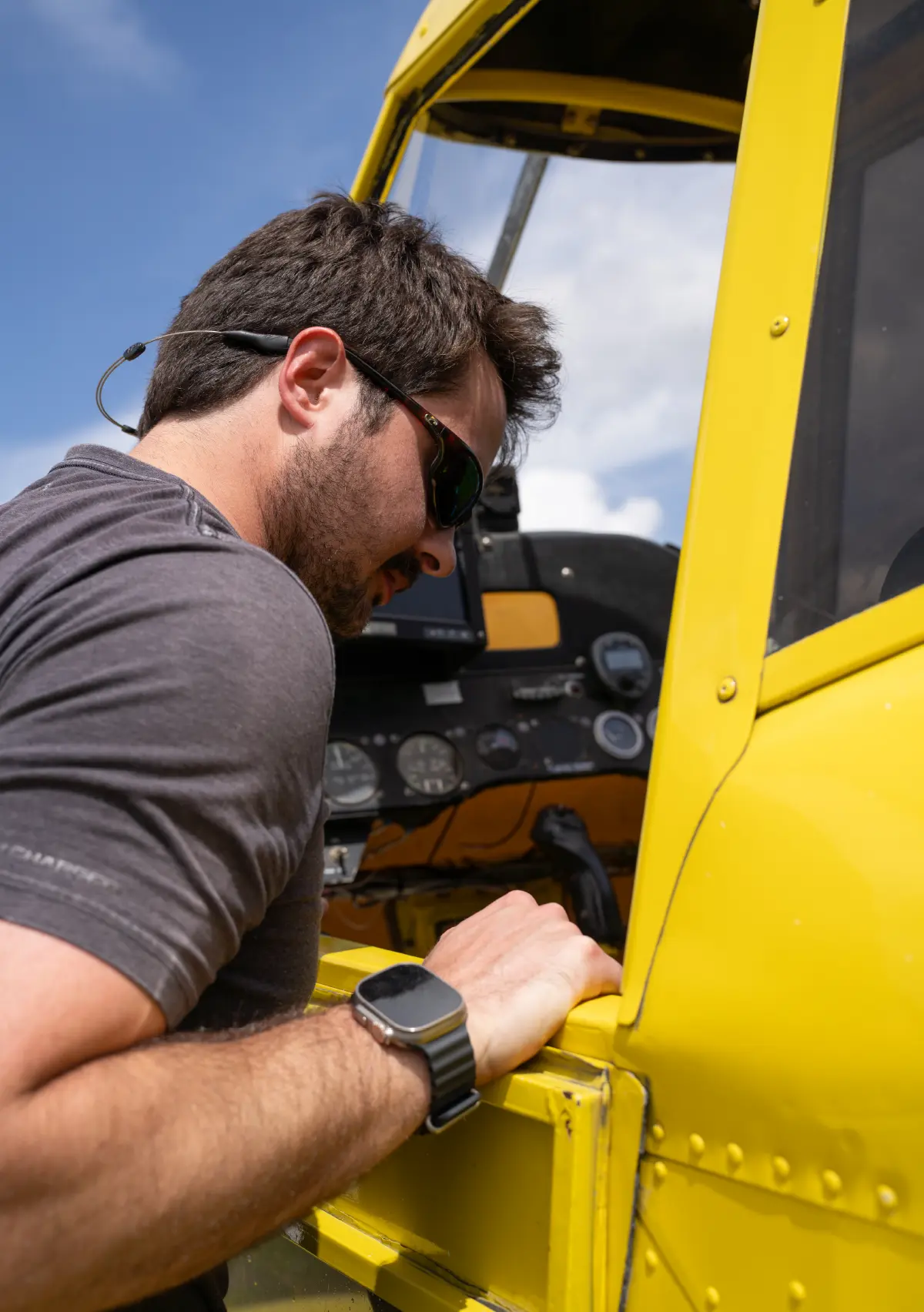
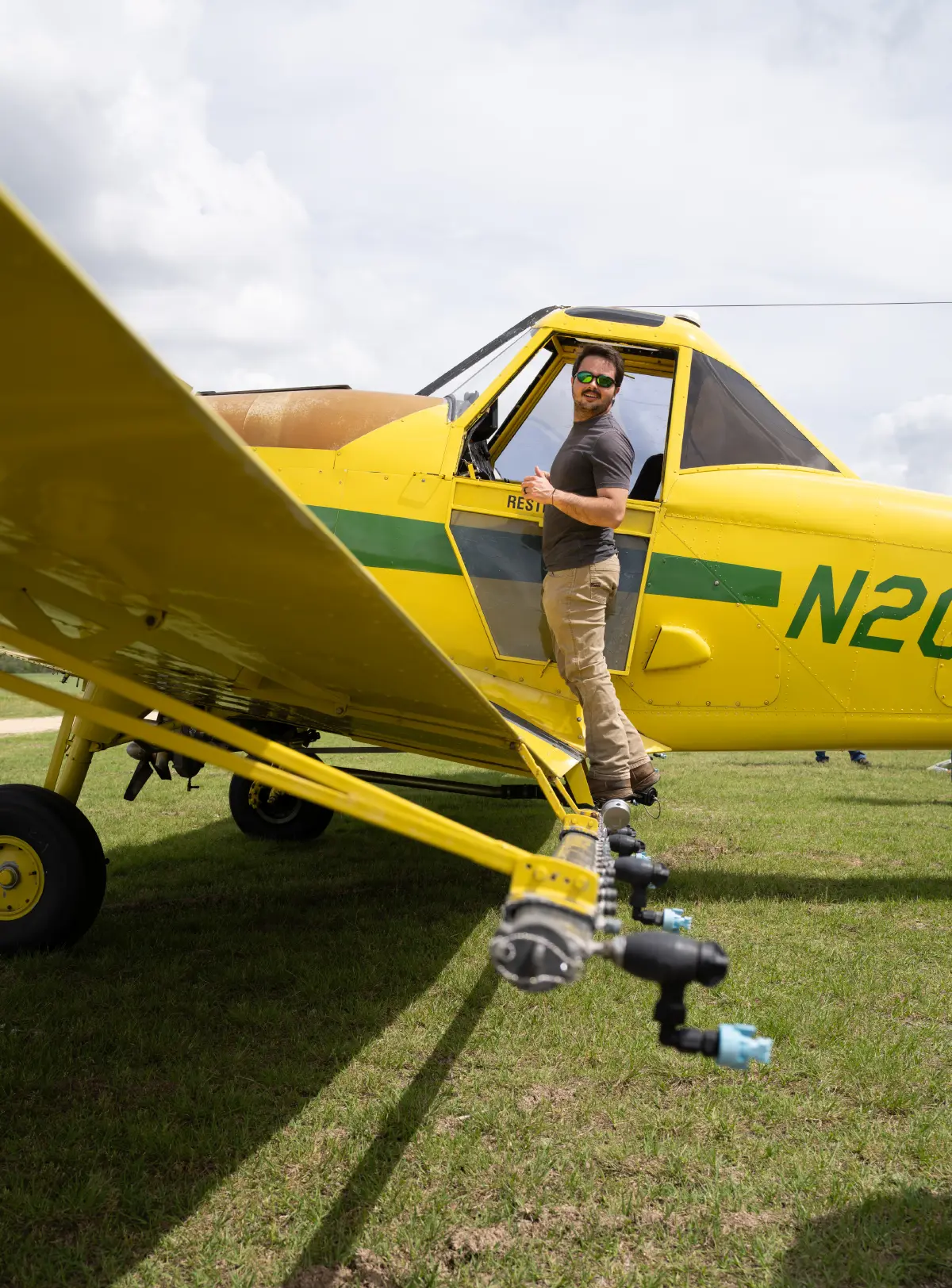
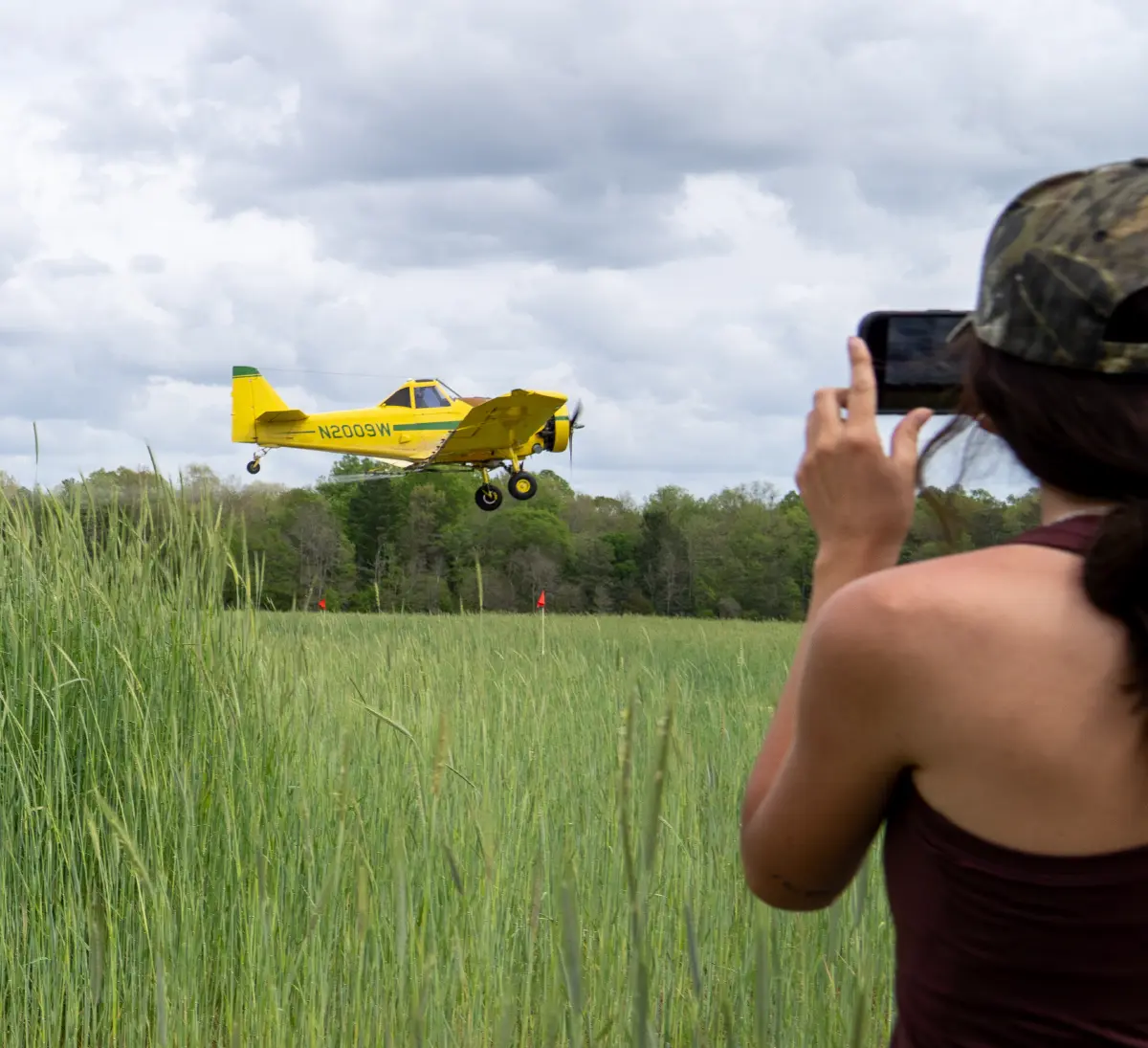
“Mr. Morris and his father showed us how their spray operation works and compared drone spraying with airplane applications,” said Adam McGhee, the department’s distance education coordinator and co-instructor for the class. “It’s really eye-opening to see both side-by-side and talk about what each does best.”
Led by Shep Morris, a third-generation pilot and farmer, Morris Farms spans 3,000 acres bordering the university’s teaching fields. For students, it’s the ideal classroom — one where lessons are written in the soil and the sky above it.
“Drones are showing up everywhere in science these days, and agriculture is no different,” McGhee said. “They can collect tons of data in a short time, and spray drones can safely reach spots that tractors or people can’t. As we saw more of these tools being used, we realized there wasn’t much training out there to help students learn how to actually use them.”
The class combines that technical foundation with plenty of field experience. The department maintains its own small fleet of drones, and each semester, students hear from business owners, lawyers, vendors, other faculty, and farmers who are shaping the industry from every angle.
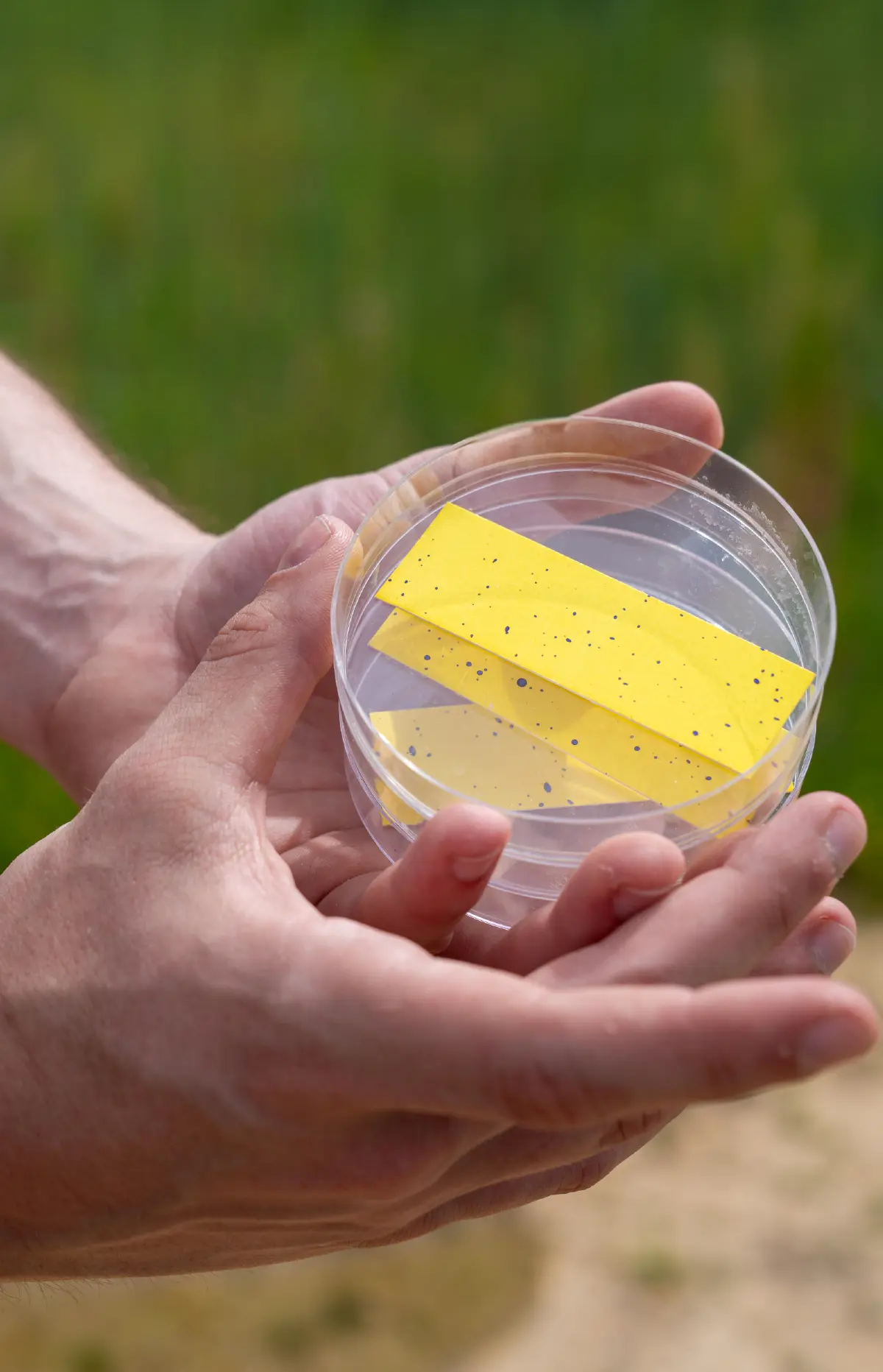
At Morris Farms, Associate Professor Steve Li adds another layer to the lesson, using water-sensitive paper to measure spray coverage from both drones and planes.
“Students loved seeing the differences up close,” McGhee said. “That trip has become one of the best parts of the whole course.”
From the roar of an airplane engine to the soft hum of a drone, students in Auburn’s crop production program are learning that the tools may evolve but the goal remains the same: to help farmers feed the world, from soil to sky.


Title
Cattle and Kangaroos
Title
Cattle and Kangaroos
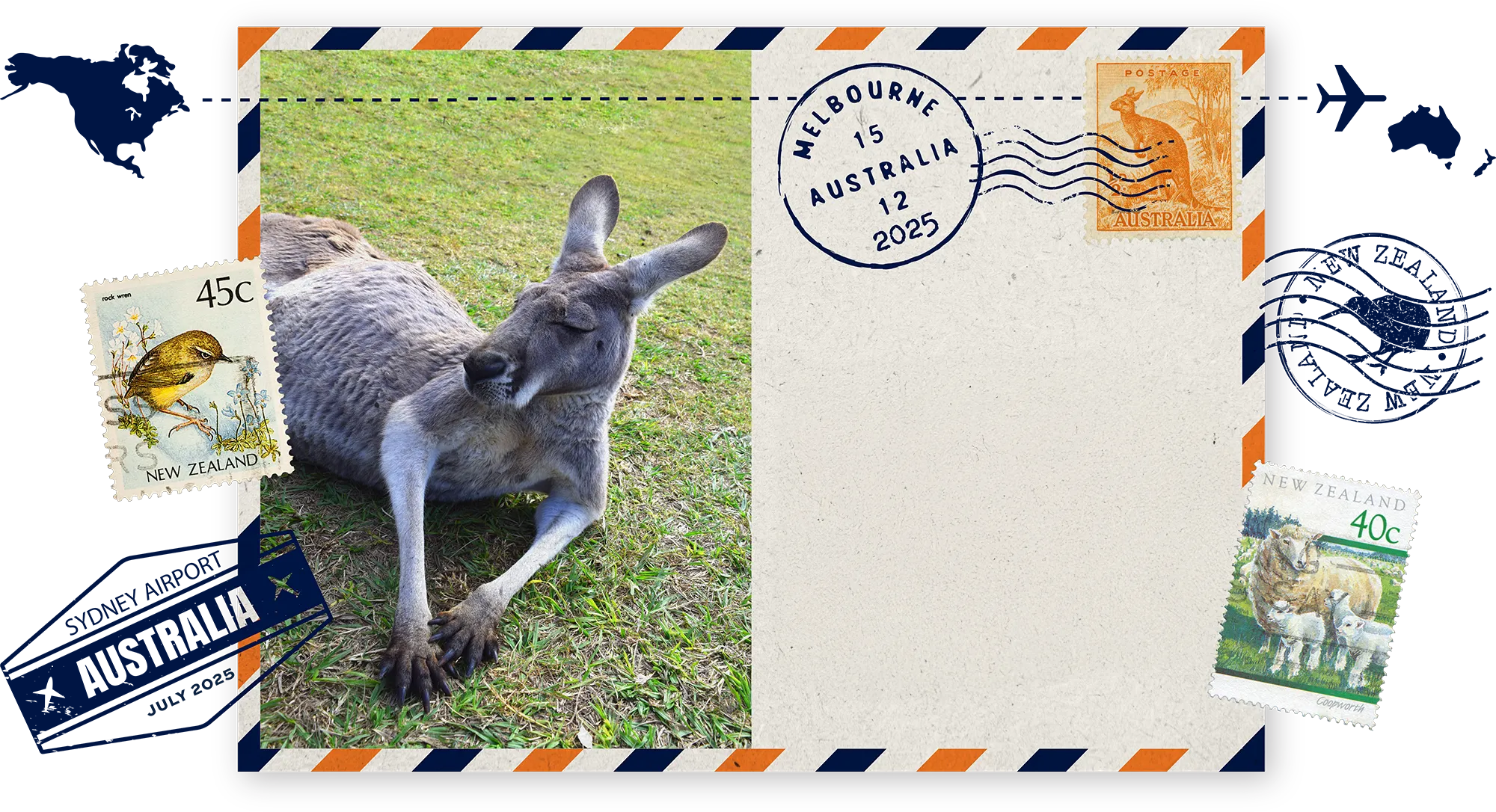
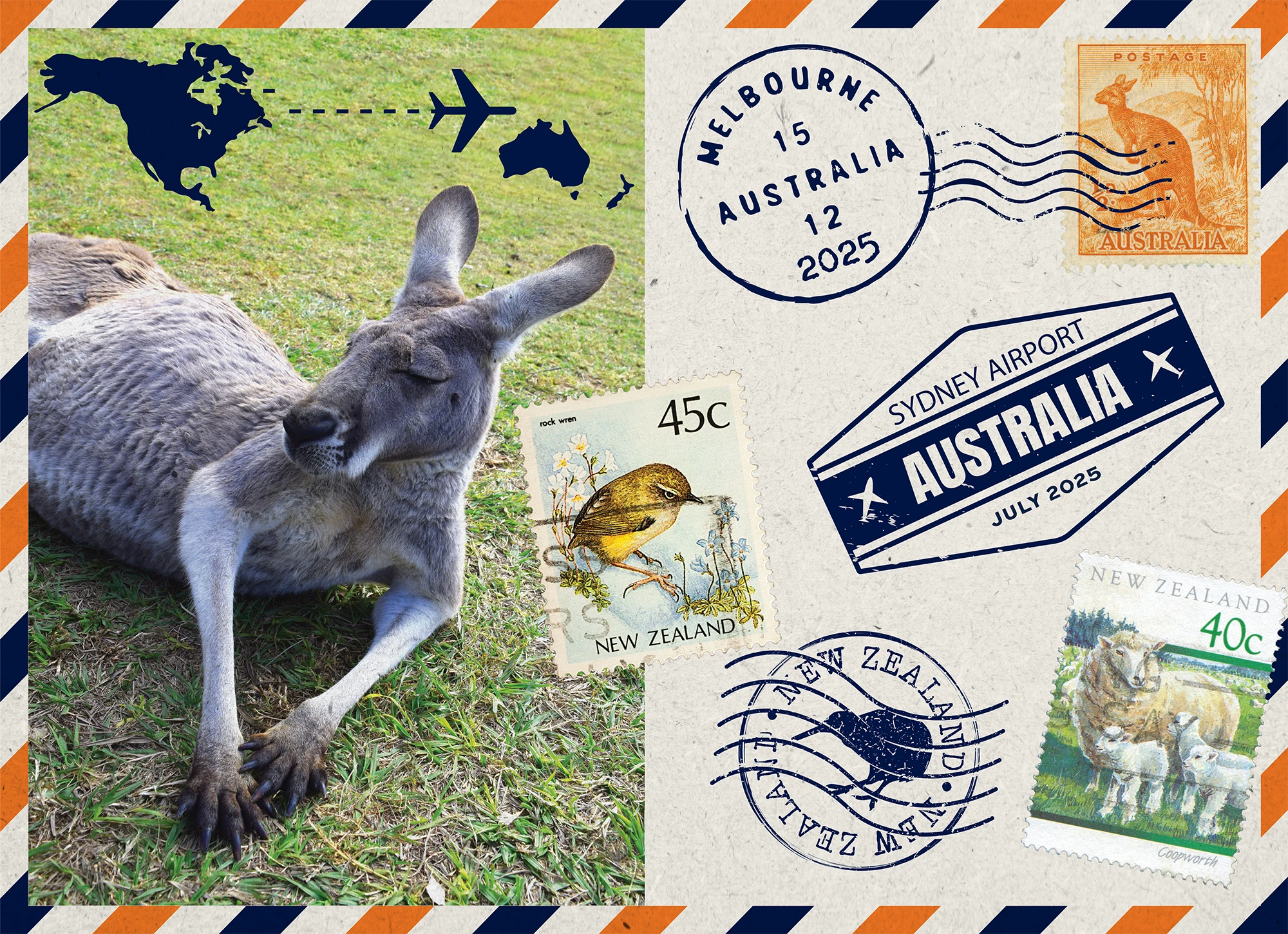
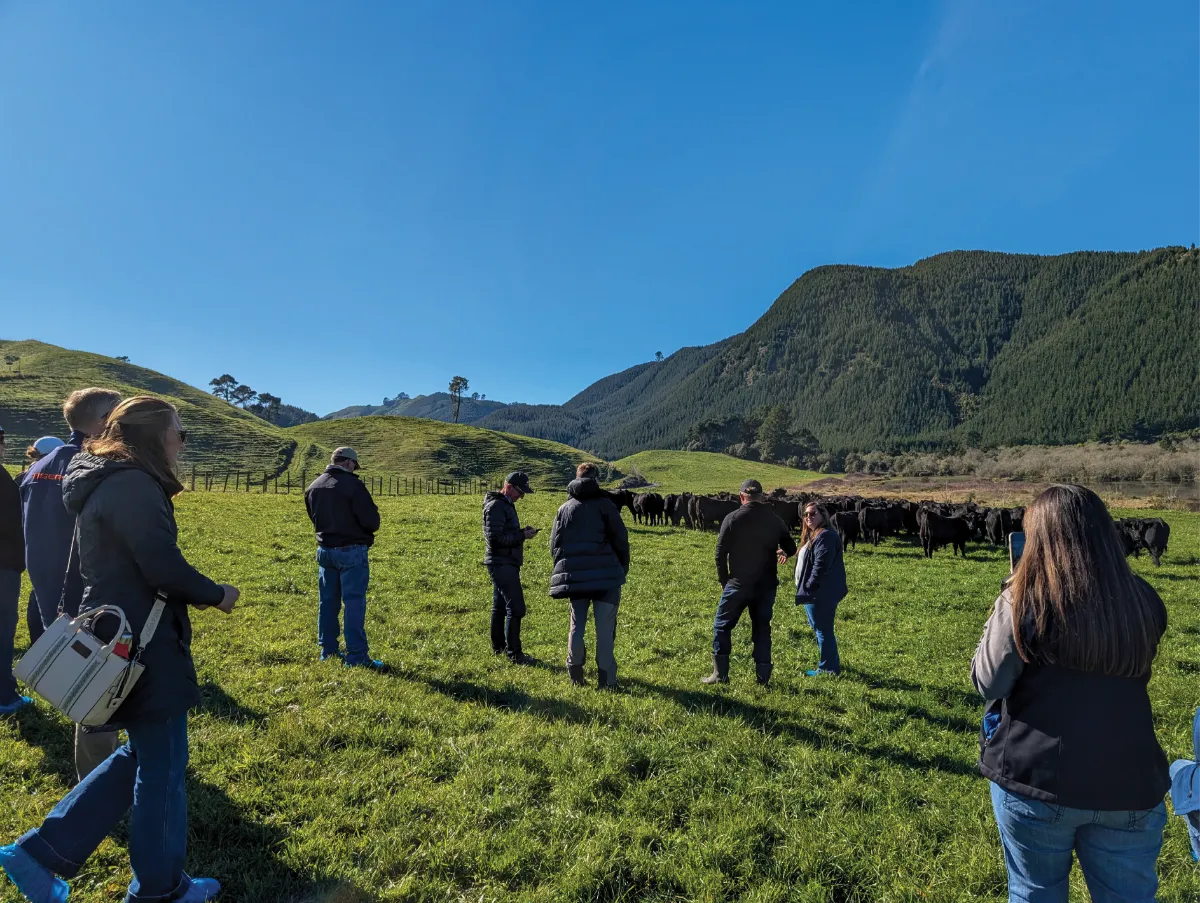
In July 2025, Auburn University animal science and forage experts took the trip of a lifetime to Australia and New Zealand. On their two-week excursion, experts from the Alabama Cooperative Extension System and Auburn College of Agriculture gained an insider’s experience into livestock and forage production within those countries.
In the agricultural industry, research is continual. The problems research seeks to solve often know no borders, making it important for experts to sometimes look beyond Alabama for answers. About every five years, the Extension and Auburn animal sciences teams plan international trips in hopes of discovering improved ways to help Alabama farmers.
Australia’s east coast is roughly the same distance from the equator in the southern hemisphere as the southeastern U.S. is in the northern hemisphere. Their climates and growing seasons are similar, so many of the same livestock and forages systems are used in both areas. While New Zealand is further away from the equator, it is known as the mecca of forages. Both countries are also hubs of technology advancement and environmental stewardship. Leanne Dillard, a forage specialist and associate professor in the Departments of Animal Sciences and Crop, Soil & Environmental Sciences, said these factors made these countries prime locations for a team trip.

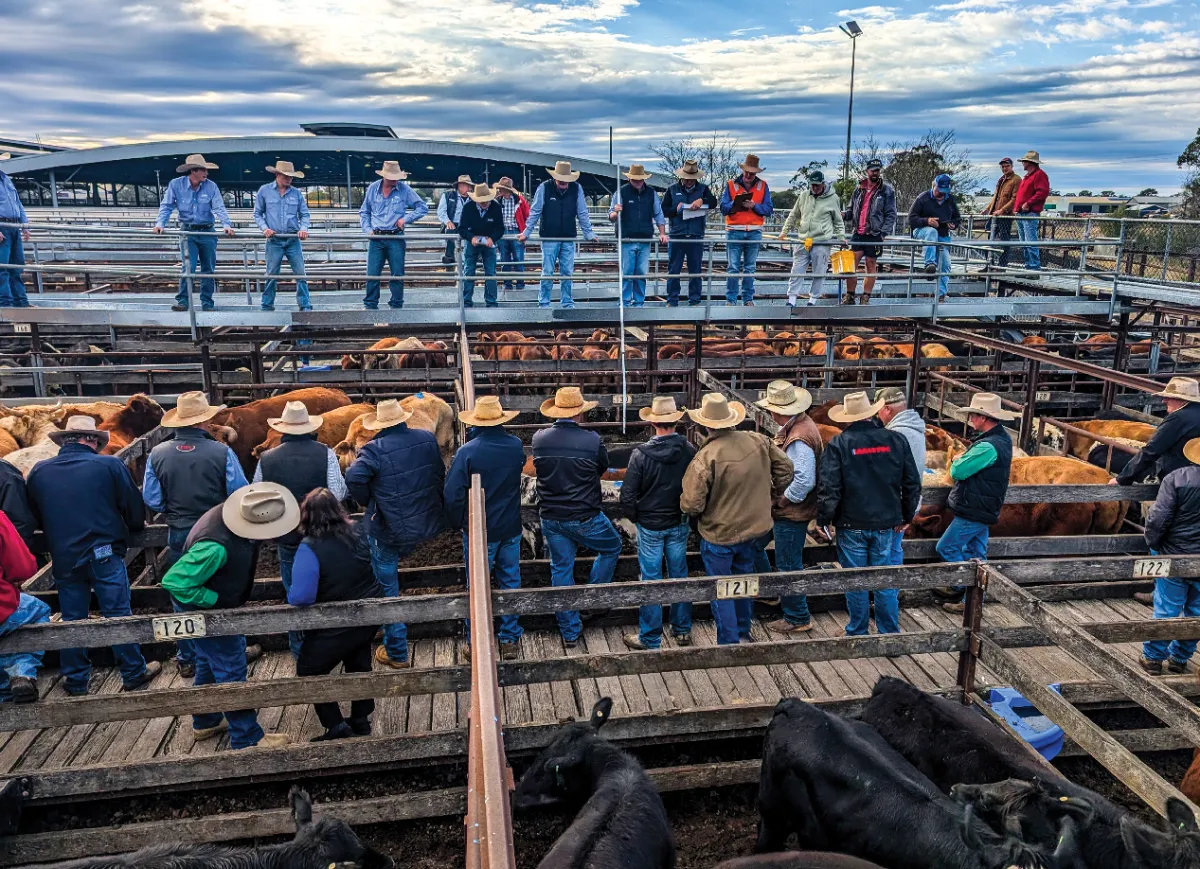
Rates of adoption of some modern herd-management technologies are low in many parts of the U.S. On the trip, Jackson County Extension Director Matthew Webb was impressed with how open producers in Australia and New Zealand are to adopting different technologies to improve their operations. Some of these technologies include smartphone apps that allow producers to monitor items such as water levels in tanks or the voltage on electric fences.
“Similar to the U.S., labor is hard to come by in these countries, and these apps make simple-but-time-consuming jobs easier to manage,” Webb said. “Agriculture is definitely a science, and the emerging technology is amazing and helpful. But there is still an artform that requires the eyes to see what changes are occurring in order to do a good job.”
One of the more interesting technologies encountered on the trip was virtual fencing used on a dairy farm. Cattle wear a specialized collar that prevents them from entering certain areas of the pasture based on borders that the farmer draws virtually. The system works similarly to lane-assist technology on a vehicle. When an animal approaches the virtual border, a series of beeps is emitted on either side of the collar. If the animal walks too close to the border on its right side, the collar will beep on that side, telling the animal to go back to the left. If the animal continues toward the border, the collar will administer a small shock. Cattle have been known to quickly learn the collar’s audio cues, eliminating the need for it to administer a shock.
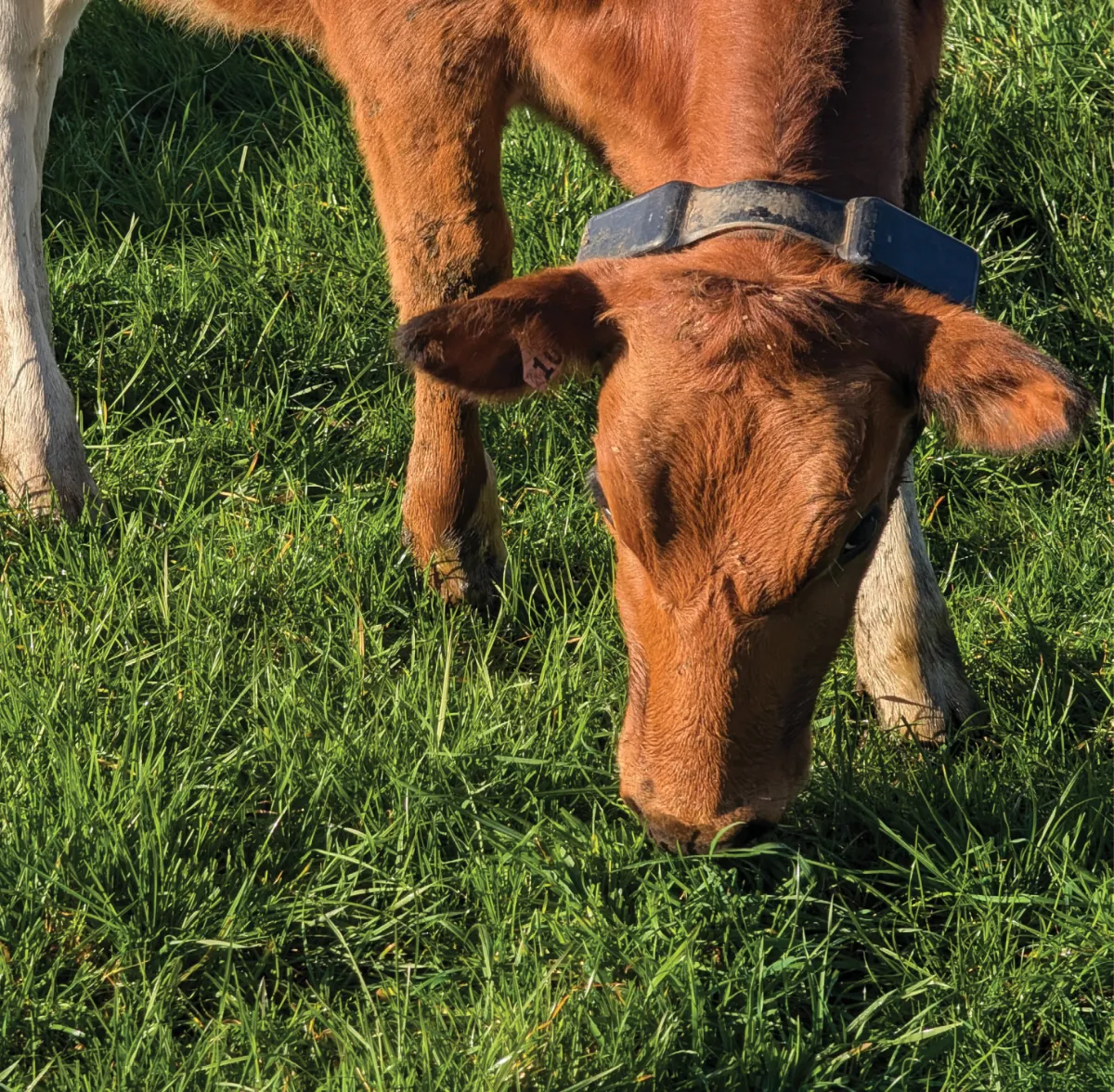

With this system, borders can be changed at any time, depending on the management need. This eliminates the need to install temporary fencing for rotational grazing. It also makes tasks such as moving cattle a lot easier for the farmer.
“I believe many of the technologies and practices we saw in New Zealand and Australia have an application here,” Mullenix said. “I am working with our faculty and Extension team to integrate more of these technologies into our outlying Alabama Agricultural Experiment Station farms in the state.”
Researchers are eager to start testing these technologies to see how they may work in Alabama herds and terrains. By doing so, Auburn is one of the first universities in the Southeast to test these technologies. In addition to the virtual fencing, Maggie Justice, an Extension beef systems specialist and Auburn assistant professor, said they will be researching in-field weighing systems and technologies that monitor animal health. That includes ear tags that report metrics like respiration.
“Bringing these technologies to Alabama could be a real game-changer for our beef producers,” Justice said. “These tools open the door to managing grazing and tracking cattle performance in ways we haven’t been able to before. It’s an exciting step forward: research that connects innovation directly to the needs of our producers and the challenges they face every day.”
Justice said the team hopes these technologies will give Alabama producers a more complete picture of herd performance and well-being. After the research trials, the teams hope to debut these technologies to producers next year through Alabama Extension beef and forage field days at the E.V. Smith Research Center and Sand Mountain Research and Extension Center.
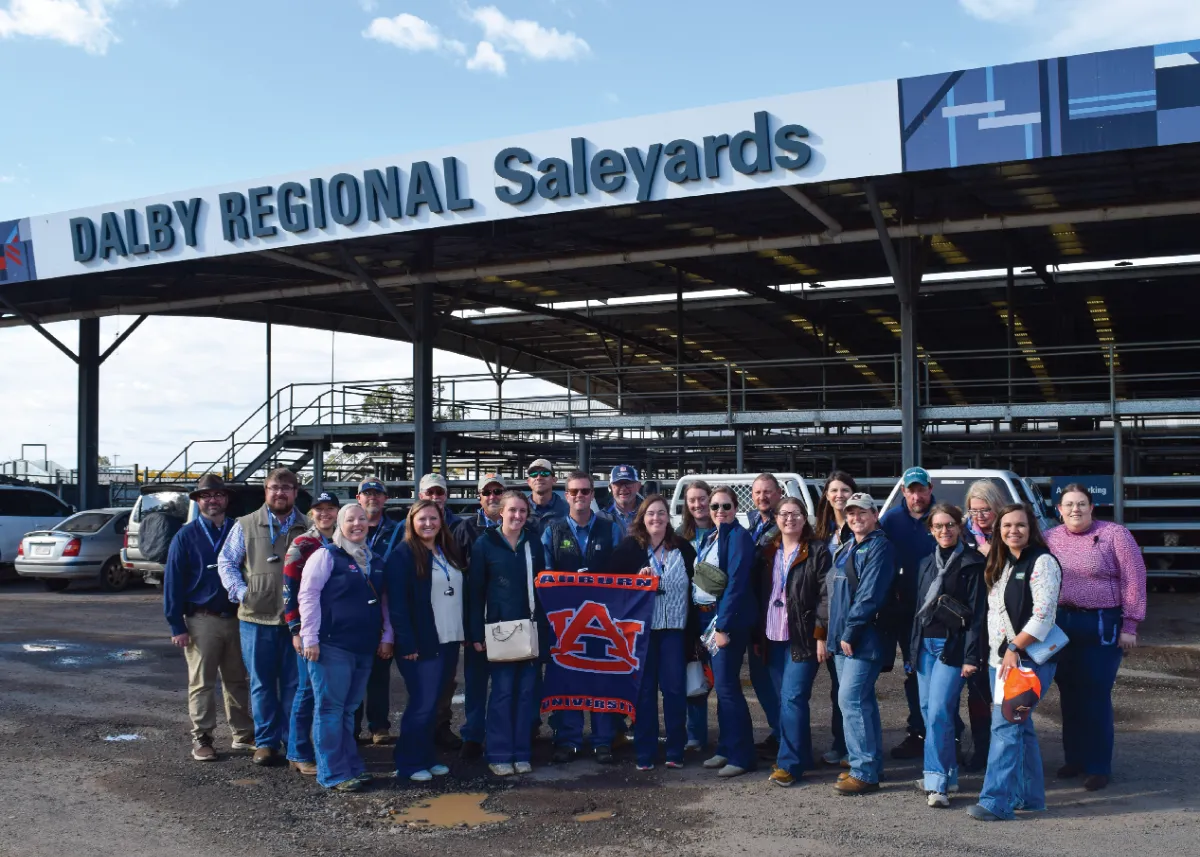

“Our advantage in the Southeast is the ability to grow grass nearly year-round,” Mullenix said. “If we can become better stewards of our resources from a forage production and nutrient cycling standpoint, we can help producers save costs and be more efficient with their land.”
For Webb, this trip was a full-circle moment, returning him to an area that holds fond memories of year’s past. More than 20 years ago, Webb completed an internship on a sheep farm in New Zealand. Now, Webb said experiencing these countries as an Extension educator was life-changing.
“It was refreshing to meet people who had a different focus when it came to goals, management and lifestyle,” Webb said. “Producers in both countries were much more aware of global trade than what I observe with my producers. I was particularly impressed that the producers we met were using their grazing and forage systems to better match the production cycles of their livestock, as well as the markets.”
More than half of the agents and specialists on the Extension animal science and forages team are fairly new to the team. While it was not the trip’s main objective, Dillard said their experiences across the two countries brought them all closer together.
“Getting to see a lot of our new agents experience a trip like this for the first time was amazing,” Dillard said. “This trip renewed my excitement for what we do. It reminded me why I picked this career and why I want to do this for the rest of my life.”
This is Our Work Films


Up Close & Somewhat Personal

An informal Q&A with
Mykel Taylor
Save the Date


Alfa Pavilion


20 Under 40

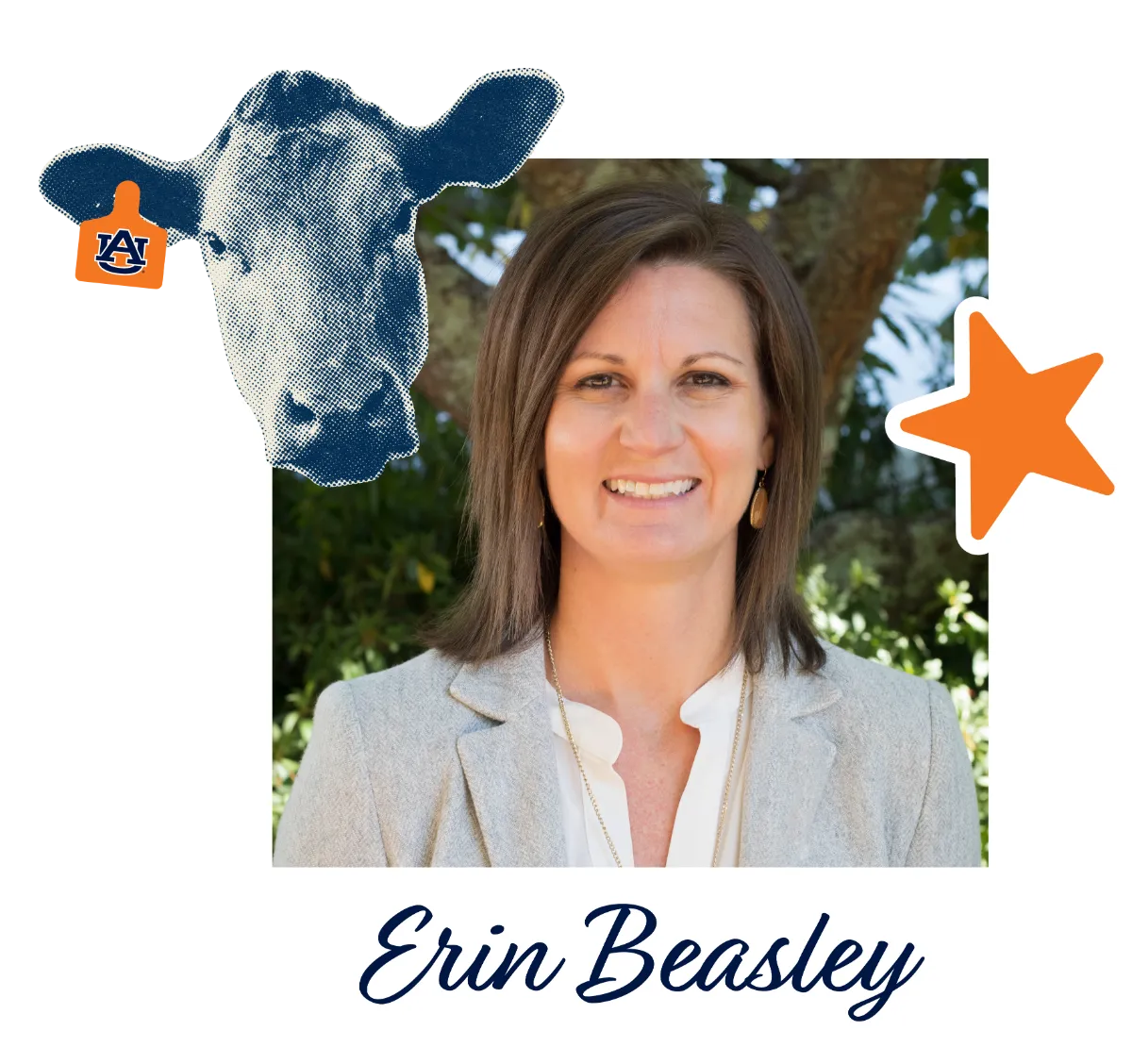
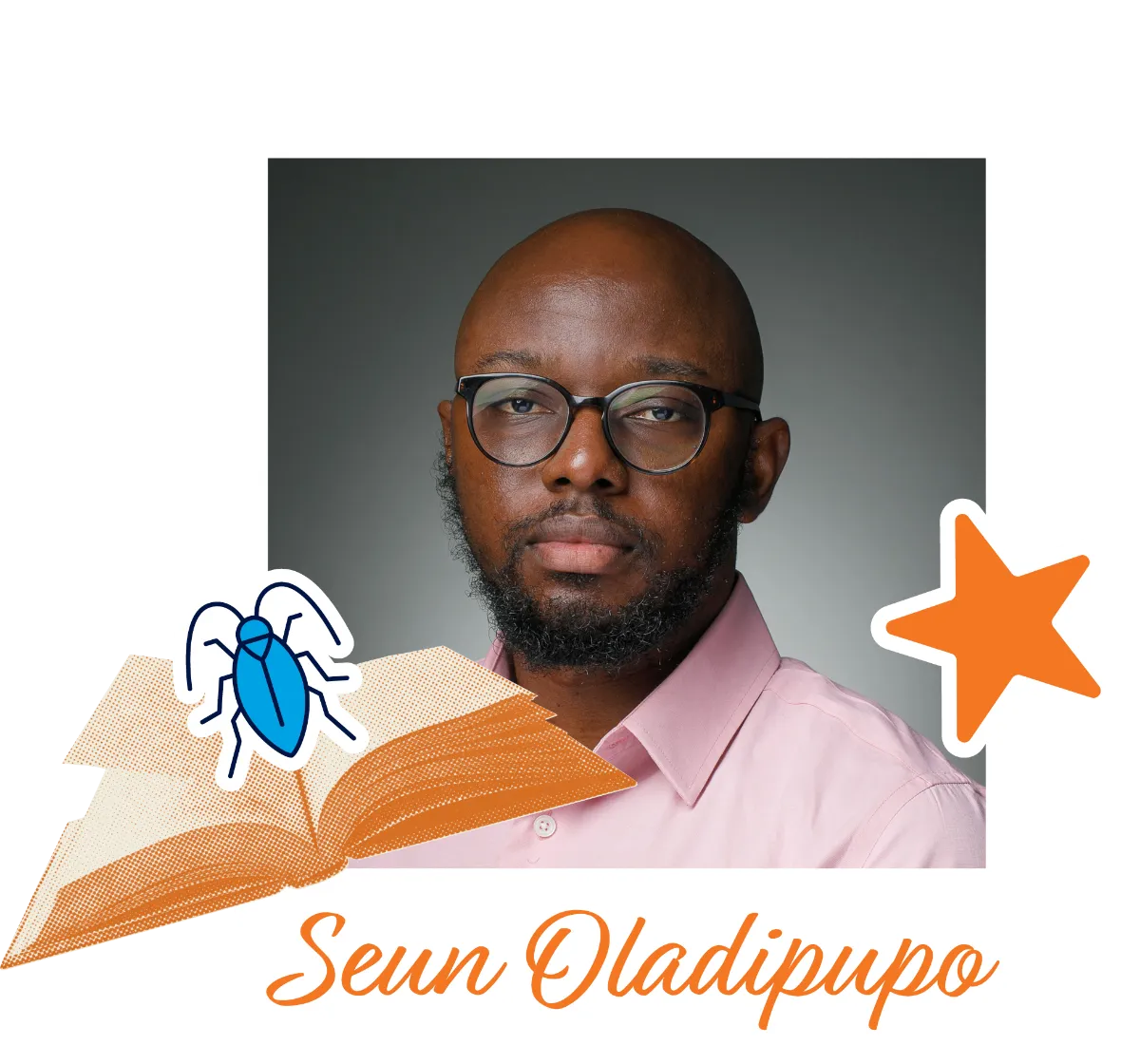
Each 20 Under 40 Award nominee must show how they make a substantial impact in their industry, field, or community and demonstrate the ideals of the Auburn Creed. Nominated by their peers, the 20 Under 40 award winners are the next generation of leaders in the Auburn Family. This year, one-fifth of the list of honorees was from the College of Agriculture. To read about the honorees, click their photos below.




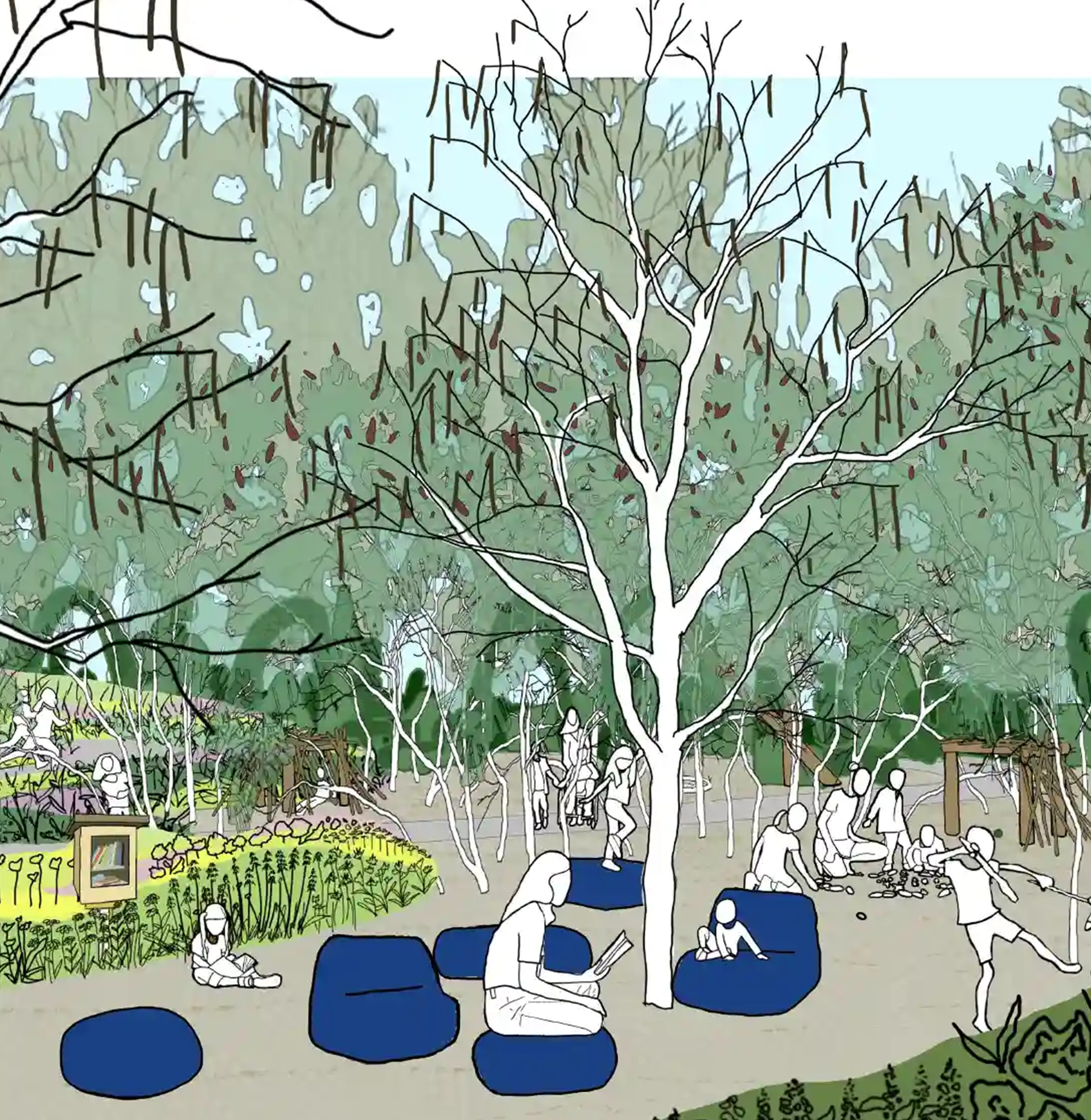


Be a part of something transformational. Support the Transformation Garden today.

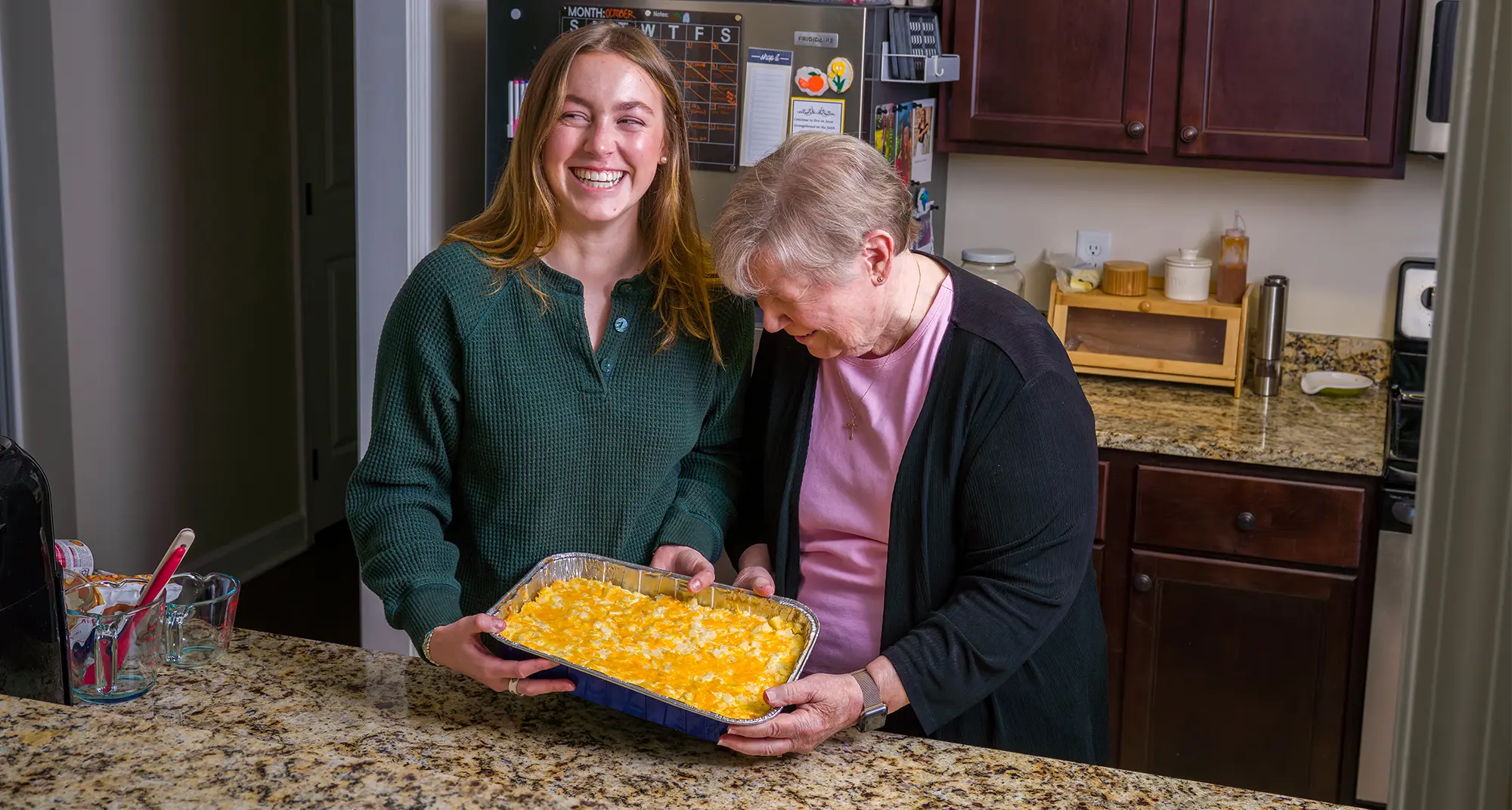


Gigi’s Potato Casserole
Opelika natives Kaitlyn and Paul married in June 2025 after five years of dating. She and Paul’s grandmother Ginger Goodman — affectionately known as Gigi to her grandchildren — have been fast friends since they met six years ago.
“She just turned 80, and we threw her a party,” Kaitlyn said. “I made her wear a party hat. It was a great time.”
In the Goodman family, when one of Gigi’s grandchildren marries, she gives the new wives a handmade cookbook full of the family recipes that have been go-tos for family events for generations. She’s given her own granddaughters a handmade name doily with their new last names upon their marriages. For Paul and Kaitlyn, she gave her own.
“I told her ‘Gigi, you don’t have to give me this,’” Kaitlyn said. “She’s big on tradition, on passing down family traditions in a way that is very sweet.”
Gigi couldn’t have found a more receptive granddaughter-in-law than Kaitlyn, who loves to cook and bake.
“Me and Gigi have so much fun in the kitchen,” she said. “Taking these pictures, we were just having a fun time. I felt like I was on a cooking show with her.”
—Kaitlyn Goodman

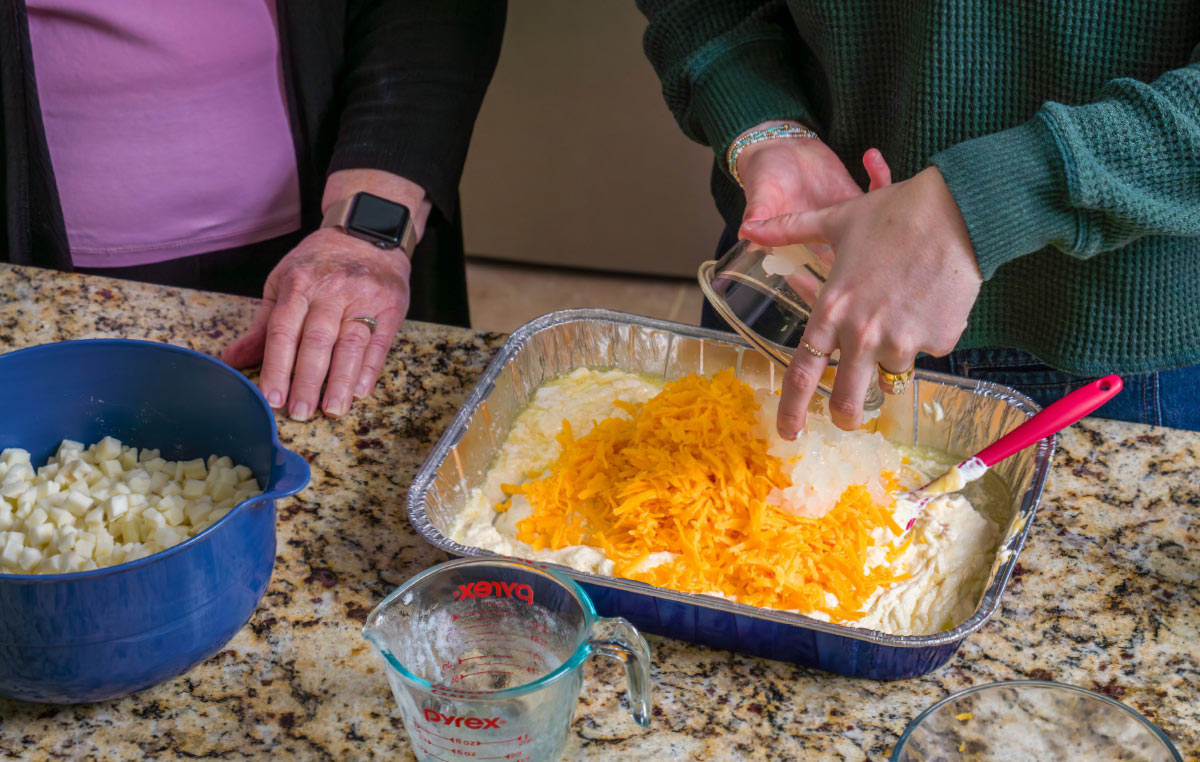
Gigi’s Potato Casserole
Ingredients
- 1 bag (2 lb) frozen hash brown cubes
- 1 (16 oz) container sour cream
- 1 can cream of chicken soup
- 1 stick (1/2 cup) butter, melted
- 4 oz chopped onion
- 10 oz mild cheddar cheese, shredded
Instructions
- Preheat oven to 350°F (175°C).
- Melt the butter and pour it into the 9×13 pan. Tilt the pan to coat the bottom.
- Mix the sour cream and cream of chicken soup in the pan until smooth.
- Add chopped onions and potatoes. Stir until well combined.
- Add shredded cheese and stir again.
- Spread the mixture evenly in the pan.
- Cover with foil and bake for 1 hour.
- Remove foil for the last few minutes to lightly brown the top.
- Let cool slightly, then serve and enjoy!

Gigi’s Potato Casserole
Ingredients
- 1 bag (2 lb) frozen hash brown cubes
- 1 (16 oz) container sour cream
- 1 can cream of chicken soup
- 1 stick (1/2 cup) butter, melted
- 4 oz chopped onion
- 10 oz mild cheddar cheese, shredded
Instructions
- Preheat oven to 350°F (175°C).
- Melt the butter and pour it into the 9×13 pan. Tilt the pan to coat the bottom.
- Mix the sour cream and cream of chicken soup in the pan until smooth.
- Add chopped onions and potatoes. Stir until well combined.
- Add shredded cheese and stir again.
- Spread the mixture evenly in the pan.
- Cover with foil and bake for 1 hour.
- Remove foil for the last few minutes to lightly brown the top.
- Let cool slightly, then serve and enjoy!



Cooking Tools
- Spatula
- Foil
- 9×13 foil pan
-
Executive Editor
Josh Woods
-
Managing Editor
Kristen Bowman
-
Digital Editor
Cheri Cannon
-
CONTRIBUTING Writers
Mike Jernigan
Justin Miller
Kacey Watson
Emma Welch -
Layout & Design
Jess Ramspeck Douglas
-
Photographers
Alabama Cooperative Extension System
Molly Bartels
Kristen Bowman
Keema Miller -
CONTRIBUTING Videographer
Bridget Brown
-
Interim Dean
Arthur Appel
-
Auburn University College of Agriculture
Office of Agricultural Communications and Marketing
5010 Haley Center
Auburn, AL 36849-5401
334-844-5887
theseason@auburn.edu
agriculture.auburn.edu
Auburn University is an equal opportunity educational institution/employer. -
© 2025 Auburn University College of Agriculture