Making a Difference

Like many modern couples, the pair first became acquainted online, when Birmingham-native Humphrey received an unsolicited recruiting email from the College that caught his attention. Undecided about his exact college future and a little intrigued, he decided on a visit to learn more. From there, it was love at first sight.
“I like to say Auburn and the College of Agriculture sort of found me rather than the other way around,” Humphrey recalled. “I had no background, experience or real interest in the agricultural field. But I was eager to learn more about it, so I decided to take a visit.
“I can remember how at-home everyone made me feel,” he added, “and specifically, how they showcased that a major in agriculture could be both a rich experience and could blossom into an incredible future post-college.”
Humphrey served as president of Ag Ambassadors and majored in agricultural business and economics with a minor in political science. As a senior, he spent four weeks in the Washington office of Alabama Congressman Mike Rogers through an internship funded by the Alabama Farmers Agriculture Foundation, learning first-hand how agricultural policy is determined at the federal level.
As Humphrey’s years at Auburn neared an end, learning more about public policy and environmental issues helped focus his career plans on a long-held area of concern. “Attending law school and becoming a civil rights advocate has always been an interest of mine,” he said. “That interest grew as my knowledge of the issues happening in the South expanded.”
Though perhaps not a traditional course for an agriculture graduate, it was one Humphrey felt well prepared to undertake thanks to his Auburn education.
“My biggest takeaway from my time at Auburn was how the College of Ag prepared me both during and after college,” he explained. “I came to the college with no background or real vision as to what I would utilize the degree for afterwards.
“But the people and resources in the college helped me realize very early-on that anything is possible with such a degree,” he continued. “As we like to say, ‘We do the work that makes the world work.’ And there are countless ways in which that work can be done. That is what makes the College of Agriculture so special.”
With a firm background in public policy in hand and law school on his radar, Humphrey headed north to pursue a Yale University master’s degree in environmental policy analysis and environmental justice.

“Yale is where I immersed myself in the study of environmental law and began to deeply understand how race and class shaped land use policy,” Humphrey noted. “I began to understand environmental justice and its connections to civil rights law. I dug deeper into my interests — particularly around the plight of Black farmers and Black land ownership in the South. I learned to question everything.”
He was also heavily influenced by his work with and mentorship by then-Yale professor Marianne Engelman-Lado, one of the country’s leading experts on environmental civil rights and later named the U.S. Environmental Protection Agency’s deputy general counsel for environmental initiatives.
His commitment to these issues continued to take shape at his next stop, as a Philanthropy Fellow at the University of California-Berkeley and the David and Lucille Packard Foundation. The foundation provides grants to non-profit organizations with a mission revolving around its three pillars of “building just societies, protecting and restoring the natural world and investing in families and communities.”
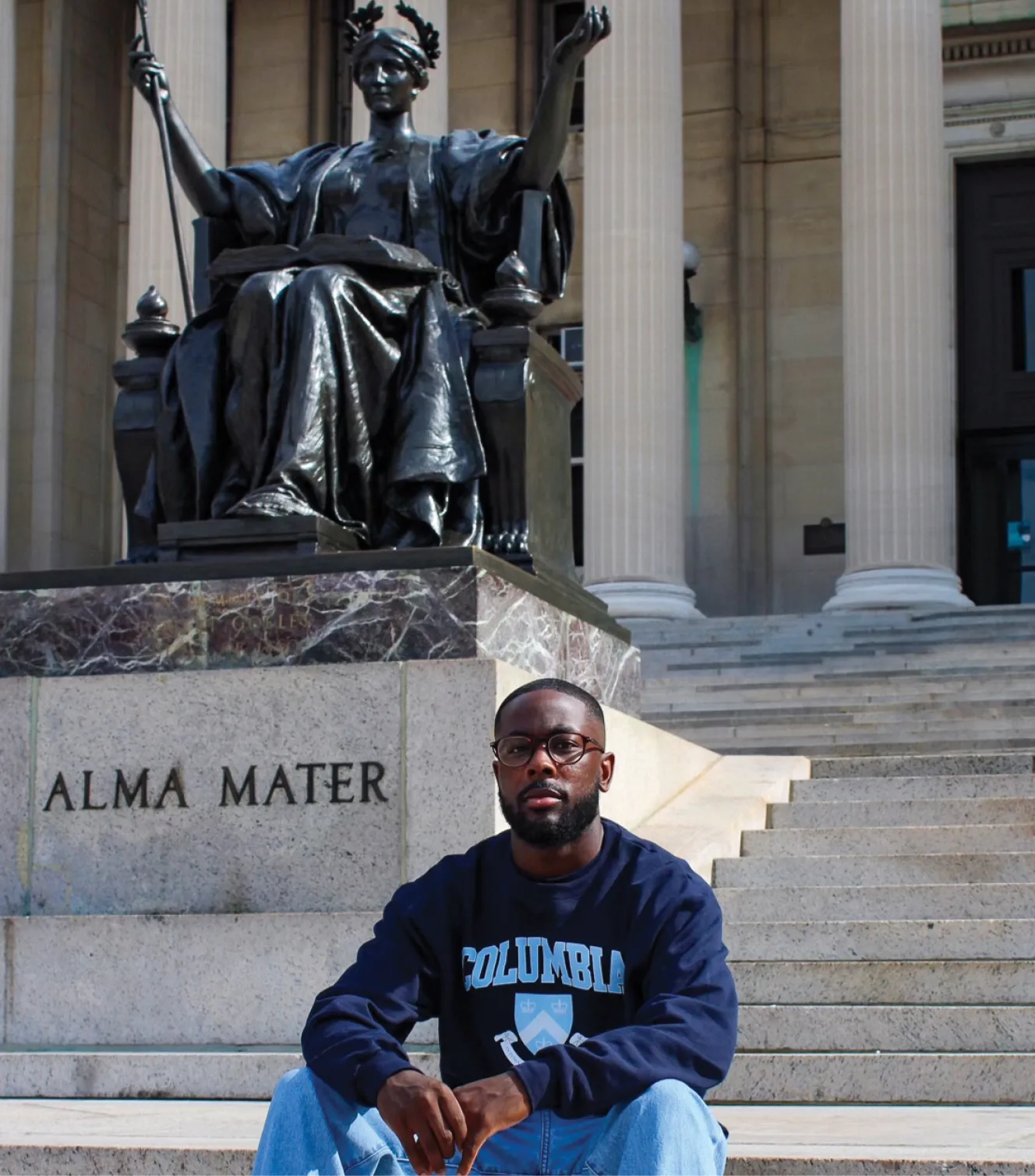
In these experiences Humphrey found his purpose — at the nexus of law, policy and philanthropy.
And it did not go unnoticed. His next destination will be law school at Columbia University as a 2024 recipient of the prestigious Marshall-Motley Scholarship, sponsored by the Legal Defense Fund (LDF).
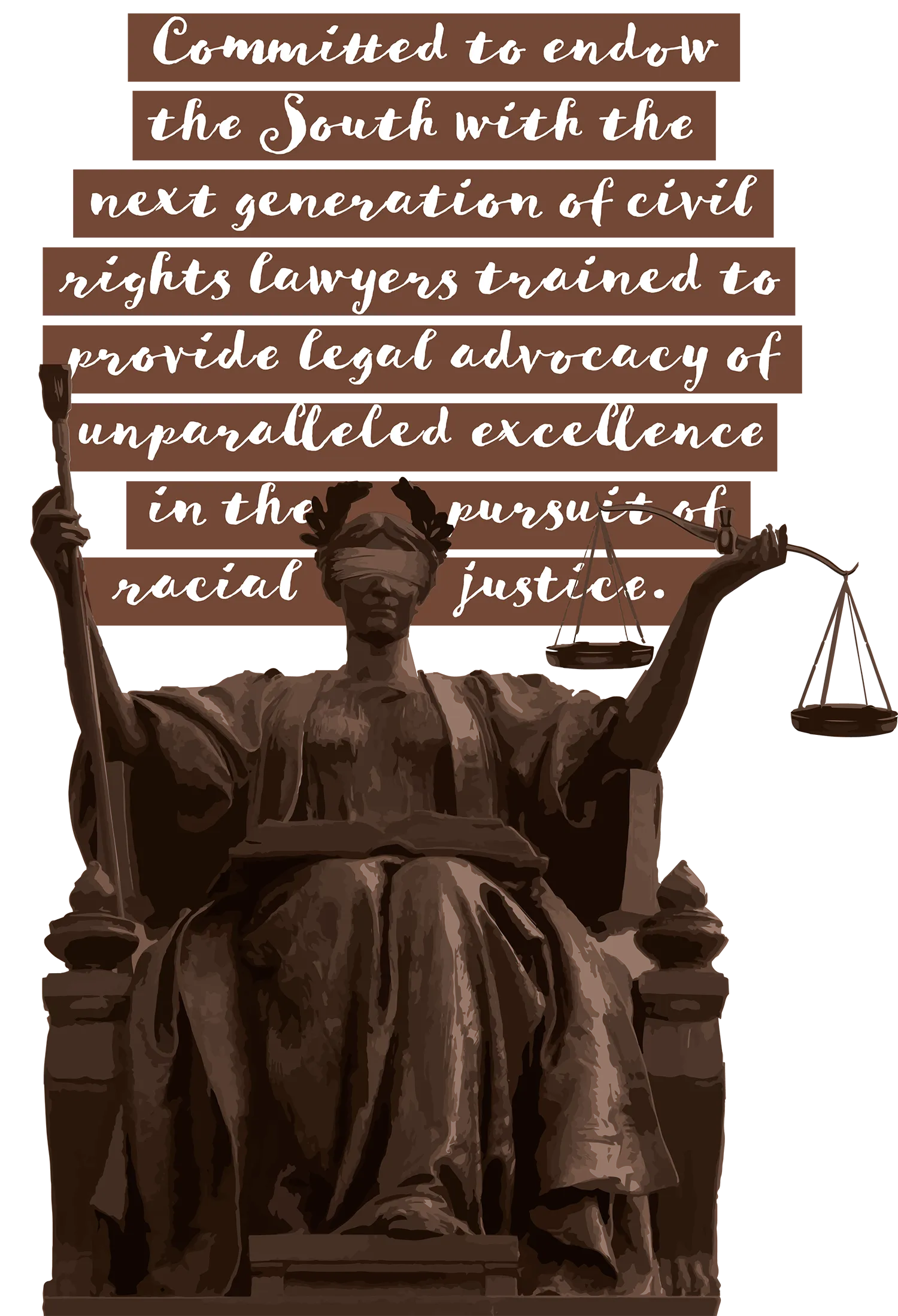
The scholarships are named in honor of Thurgood Marshall, the famous civil rights attorney, LDF founder and first African American justice on the U.S. Supreme Court, along with iconic civil rights litigator and first black female federal judge Constance Baker Motley. The program is “committed to endow the South with the next generation of civil rights lawyers trained to provide legal advocacy of unparalleled excellence in the pursuit of racial justice.”
Scholars are afforded a full tuition scholarship for law school, a living stipend, summer internships with national and regional civil rights organizations with offices in the South focused on racial justice, a two-year postgraduate fellowship focused on a racial justice practice in the South; and access to special training sponsored by the LDF.
Humphrey said the scholarship is a final piece of the puzzle in preparing him to return to the South as a civil rights advocate, enabling him to start realizing the long-held goal that began to take rough shape in the Auburn College of Agriculture and has matured through his varied experiences since: to make a difference for those that years of misguided or unjust law and public policy have left behind.